A New Design Foundation for Pool Controls

Role
Interaction Designer, Researcher
Timeline
June 2022 - January 2023
Tools
Figma, FigJam, Miro
Deliverables
6 Feature concepts, 10 User flows, Design system
Overview
Fluidra partnered with Frog to design a user-friendly interface for their In Can Display (ICD), a pool control panel that needed to serve both homeowners and technicians while working within hardware limitations like low screen resolution. The result was a robust and versatile interface that balanced simplicity and functionality, delivering a seamless experience despite technical constraints.
Reimagining the In-Can Display for a Smarter Pool Ecosystem
A Cross-Functional Proof-of-Concept That Balanced Hardware Limits, Two Distinct User Groups, and Fluidra’s Future Vision
Fluidra was exploring a new direction for its connected pool ecosystem, and leadership needed a concept that proved a modernized In-Can Display (ICD) could serve as the foundation for future hardware. This concept needed to demonstrate how a small, embedded screen could deliver a simpler experience for homeowners, a more capable diagnostic tool for technicians, and a scalable design model that aligned with Fluidra’s roadmap.
I served as the Interaction Designer responsible for the interaction model, UX patterns, and cross-functional alignment. I worked closely with Fluidra’s product leads, engineering teams, and PMs to prototype multiple pathways, evaluate constraints, and deliver a proof-of-concept that helped leadership validate the direction of the next ICD family.
This project carried outsized risk for Fluidra. As the company’s first Integrated Control Device experience, the interaction model established here would shape expectations not just for a single product, but for an entire family of connected hardware experiences. Any misalignment between homeowners and pool professionals would introduce long-term design debt, fragment system usage, and complicate future expansion across Fluidra’s ecosystem. Getting the foundation right was critical.
The Challenge
One Small Screen Serving Two Very Different Users
Discovery work with Fluidra leadership, homeowners, and technicians revealed a fundamental tension the new ICD approach would need to resolve.
Homeowners wanted a calm and reassuring way to check temperature, pool modes, lighting, and filtration. They needed clarity and the confidence that they were not “breaking” anything.
Technicians needed rapid diagnostic access, deeper system health data, and structured troubleshooting tools. Their work is time-sensitive, so delays or buried information directly impacted job efficiency.
Our evaluations made it clear that approaching both audiences with one unified workflow introduced avoidable complexity. Navigation became dense, essential data sat too deep, and tasks didn’t match real-world behavior.
The design problem became very clear. How do we create an interface that remains simple for homeowners while supporting advanced professional workflows, using a limited screen that cannot afford complexity creep?
Homeowners – Wanted a simple, straightforward way to control temperature, filtration, and lighting without navigating complex menus.
Pool professionals – Needed a robust, data-driven interface that allowed them to diagnose issues, monitor equipment health, and manage multiple installations efficiently.
My goal for the first ICD iteration was to design a user-centered interaction model that balanced efficiency and flexibility—enabling smooth transitions between simple and advanced functions. I focused on early usability testing to ensure the interface met the needs of both homeowners and pool professionals.
My role:
Designed user flows enabling smooth transitions between simple and advanced features
Built low- and high-fidelity prototypes to validate usability
Created efficient navigation and control patterns for all user types
Collaborated with visual designers and engineers to ensure cohesive, feasible UI
Led the creation of the information architecture, translating complex system capabilities into an intuitive, task-oriented structure

Phase 3 final concept
Research & Insights
The foundation of Fluidra’s ICD experience was shaped through early user research conducted before an interaction model existed. We worked closely with homeowners and pool professionals to test assumptions, explore behaviors, and understand how different users approached control and configuration. Research sessions focused on how users transitioned between simple operation and advanced functionality, revealing where clarity supported confidence and where friction disrupted flow.
From these insights, a clear direction emerged. The system needed to balance approachability with depth, supporting new users while remaining powerful for experts. Research highlighted opportunities to improve discoverability, simplify decision making, and establish a scalable interaction hierarchy. These findings informed the interaction strategy and information architecture, setting design principles that guided the initial ICD system and positioned it for long term growth.
Research activities
Introduction & Quick Start
We learned about each participant’s background and began the interactive prototype on Quick Start
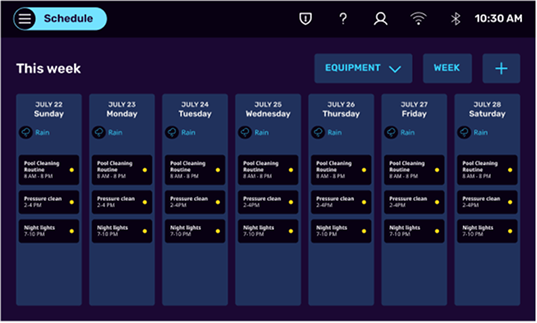
Scheduling
Participants used two variations of a scheduling tool: a calendar and event feed to create scenes and events
Navigation
Participants completed tasks related to navigating the ICD and its primary features
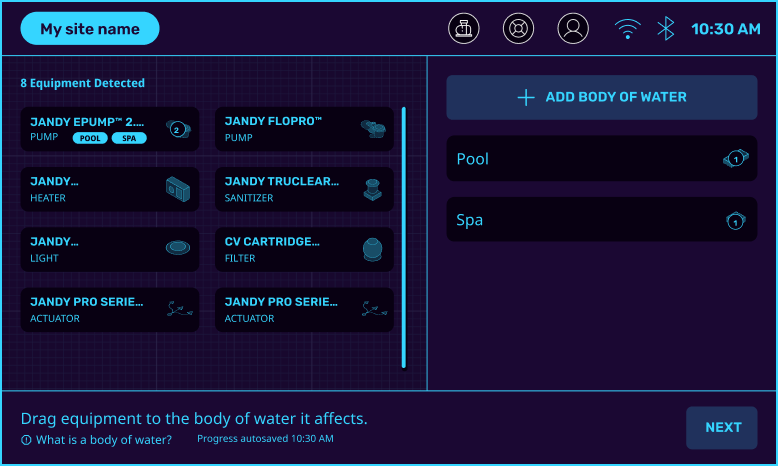
Comparison Activity
We probed on their preferences for scheduling, status, and equipment options
Establishing an Interaction Model
Before creating screens, I led the effort to define an interaction model that could adapt to different user needs and expand across Fluidra’s upcoming hardware initiatives.
I collaborated with engineering to understand firmware constraints, input limitations, screen rendering behavior, and reliability requirements for outdoor operation. These constraints guided early decisions about how deep navigation could go, how many states each component could support, and how much onboard logic could support conditional automation.
With PMs and Fluidra leadership, I explored multiple navigation approaches through low-fidelity prototypes. We evaluated:
A hub-and-spoke model
A tiered model with homeowner vs technician layers
A contextual model with progressive disclosure
A condensed card-based model
Through joint review sessions, we aligned on a progressive complexity model. Homeowners would receive immediate clarity, and technicians could intentionally access deeper system states without adding stress or cognitive load to the primary experience.
Initial Interaction Model
Designing for Hardware Constraints Without Compromising Modern UX
Once the model proved viable, I moved into detailed design. The ICD screen is small and must perform outdoors, so precision mattered. Engineering provided constraints around color reproduction, backlight behavior, touch sensitivity, and how many simultaneous elements the firmware could reliably animate.
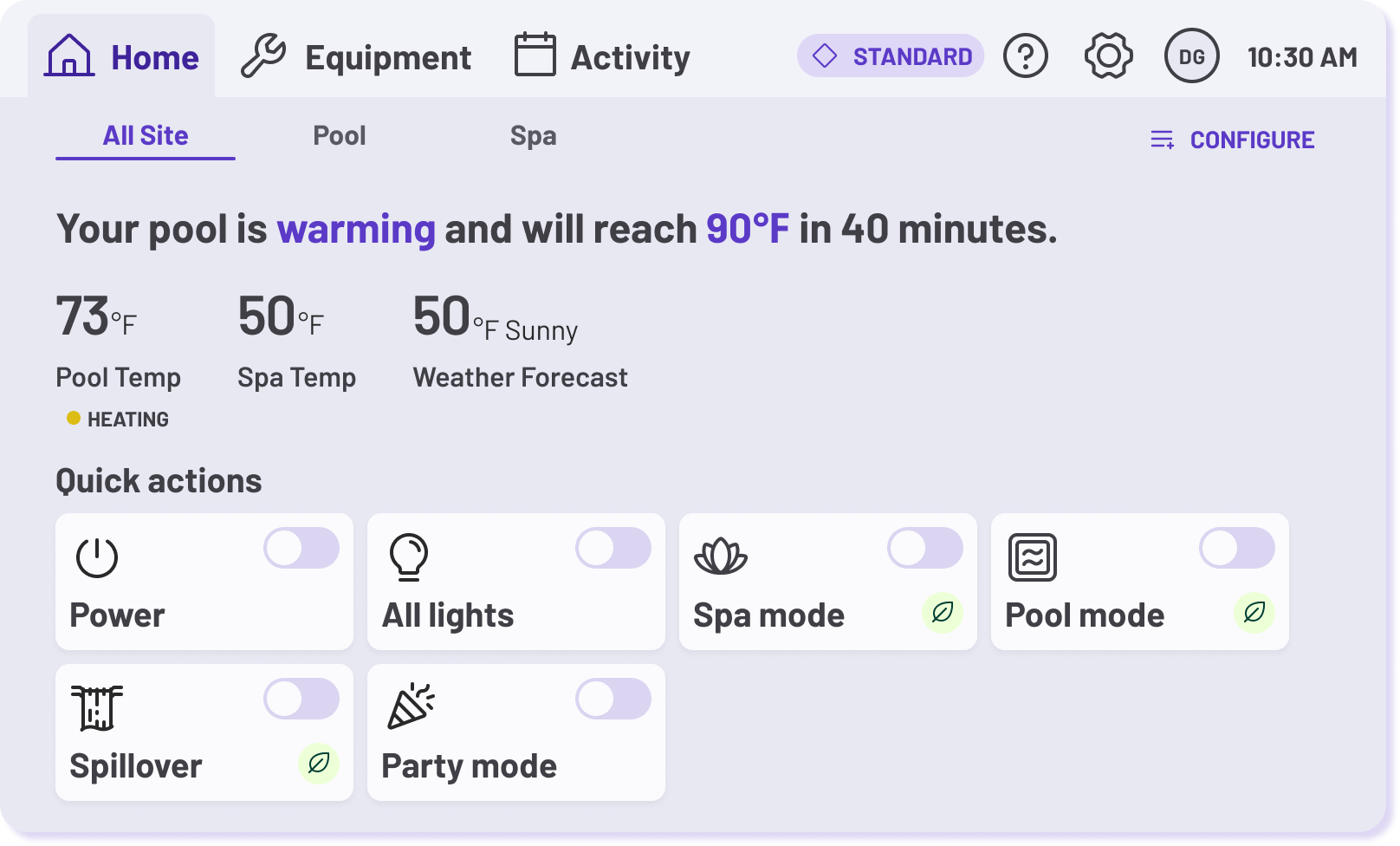
Homescreen for Everyday Control
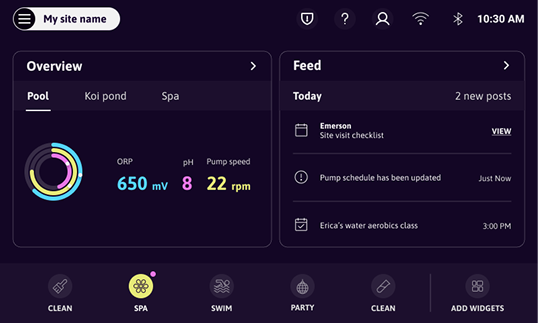
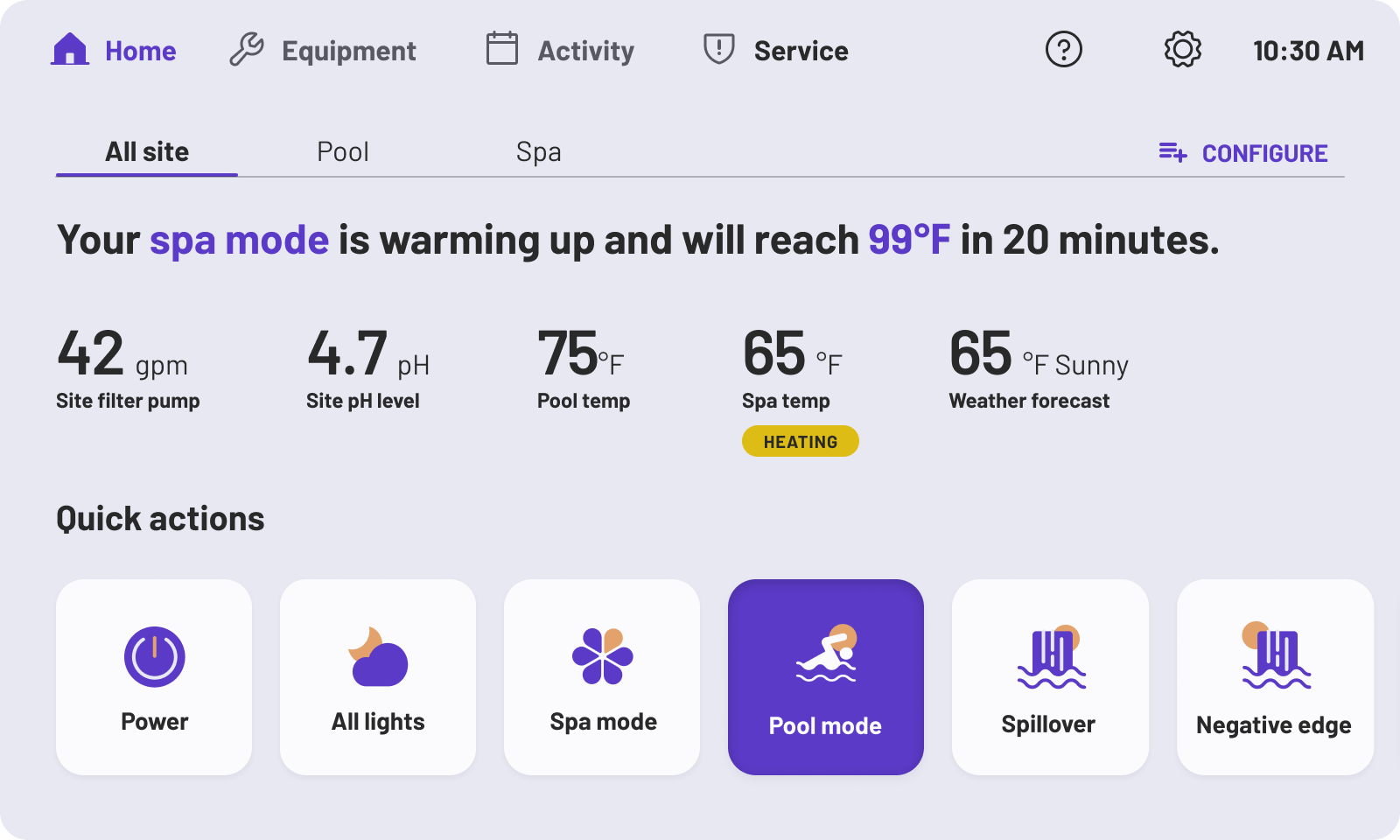
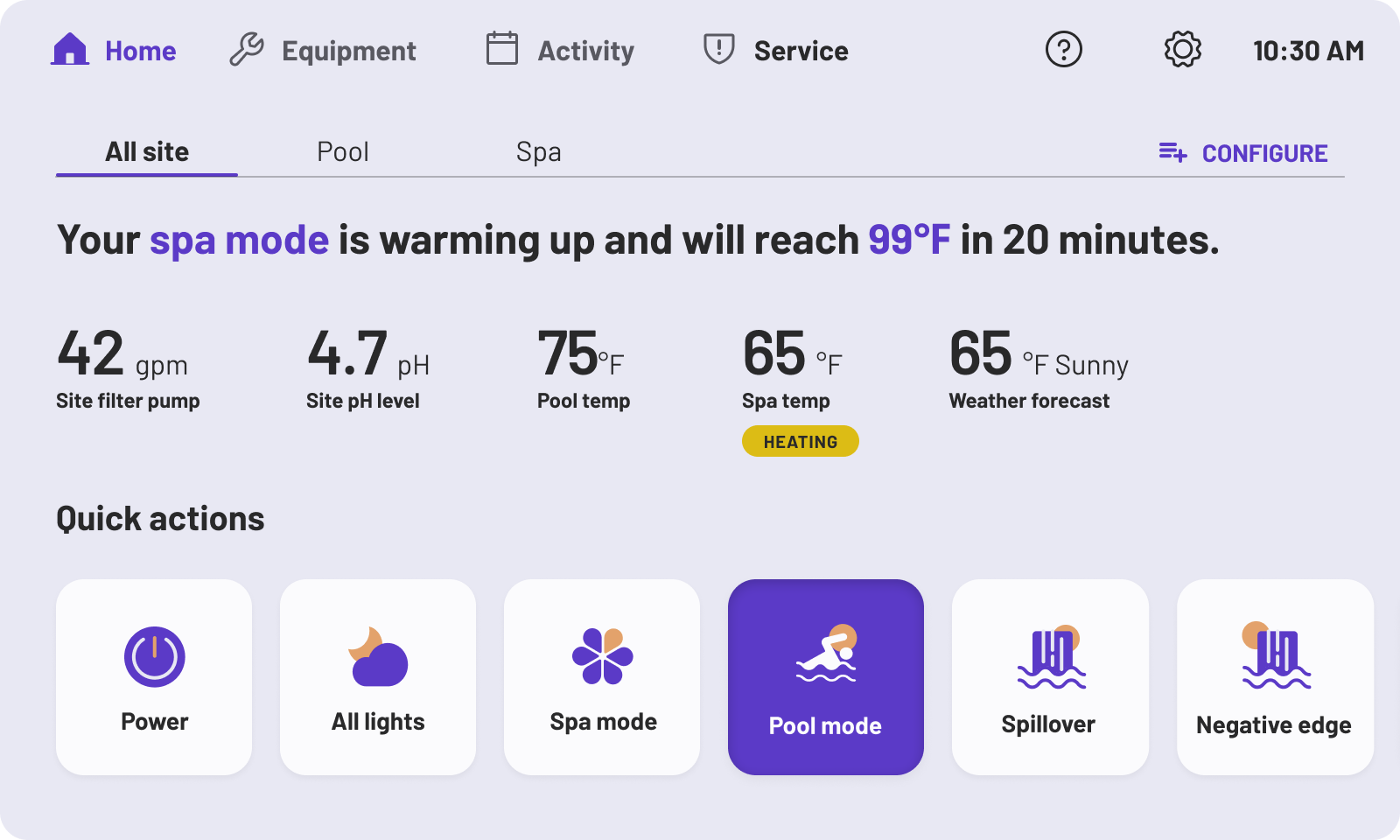
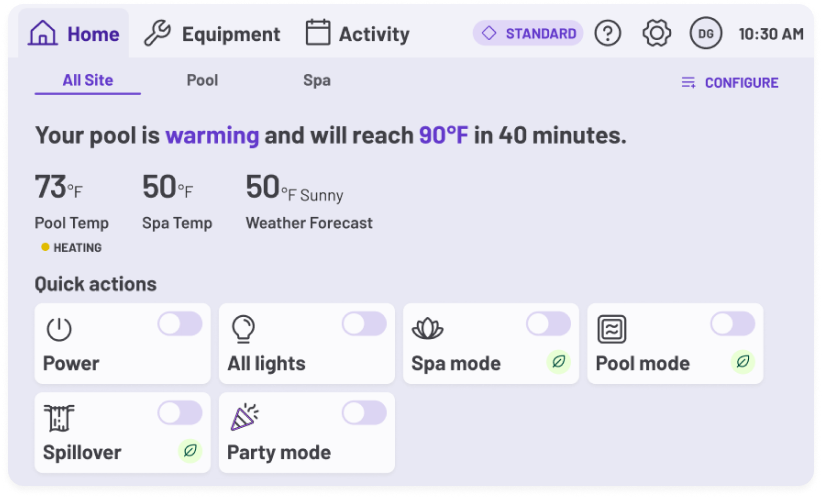
The Home screen became the anchor for clarity. It surfaces temperature, flow rate, pH, and mode in a way that communicates system status at a glance. I prioritized contrast, spacing, and a predictable layout that gives homeowners immediate confidence. Quick actions reduce trips into deeper menus.
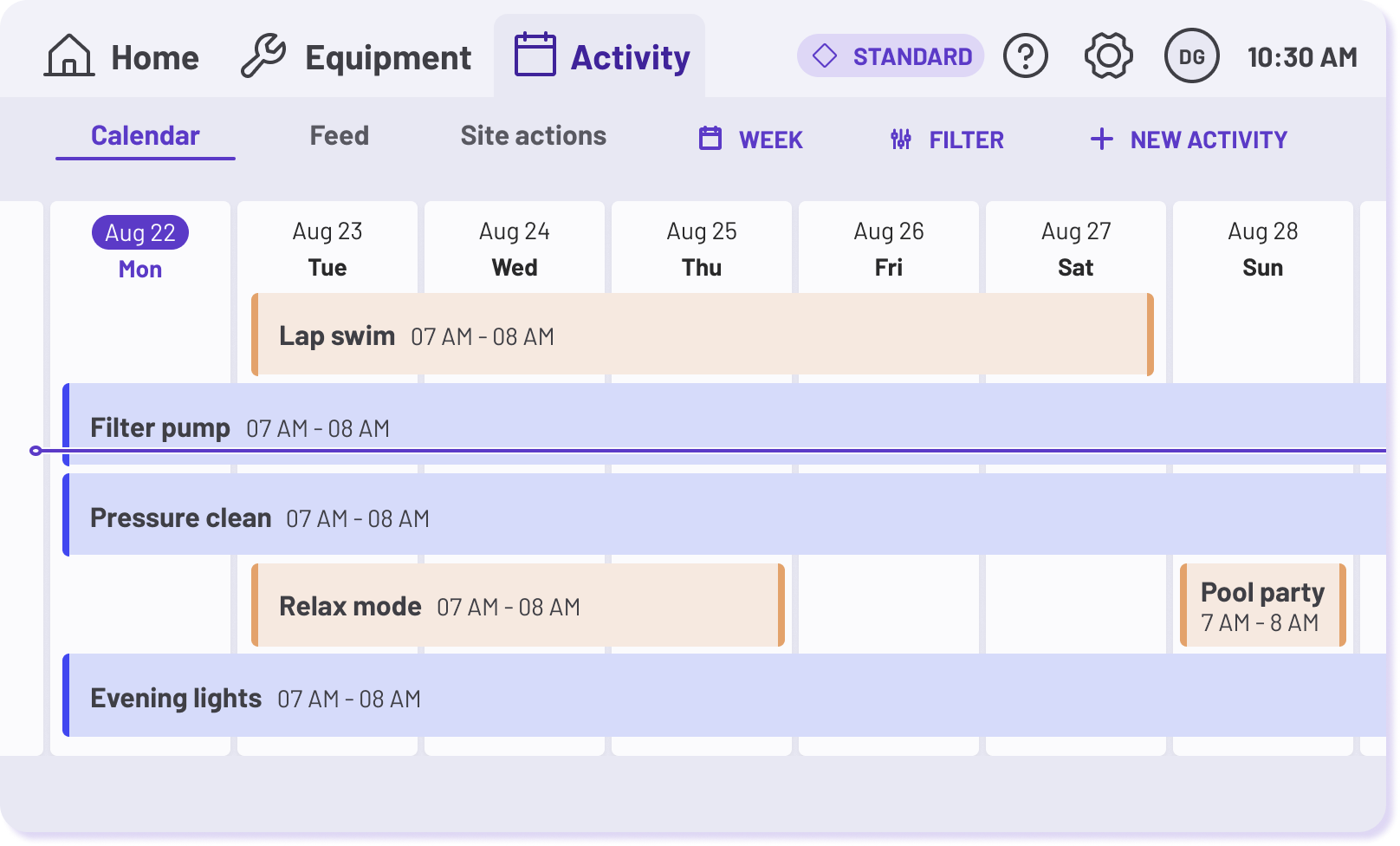
Scheduling for Smarter Pool Management
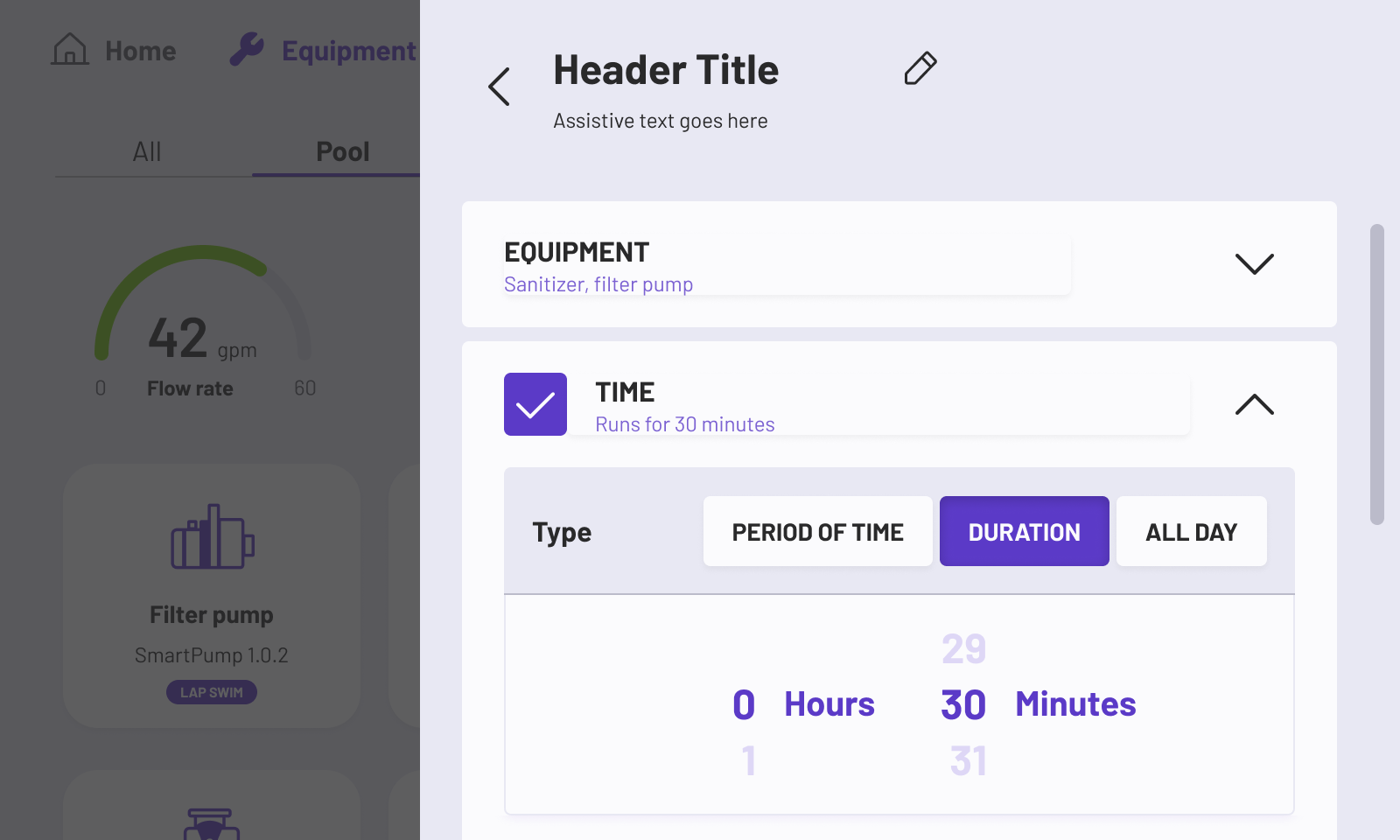
The legacy scheduling experience was one of the highest-friction areas. To fix this, I rebuilt the feature with two clear lenses: a calendar for planning and an activity feed that shows meaningful history. This structure made automated routines feel more predictable and removed ambiguity during setup.
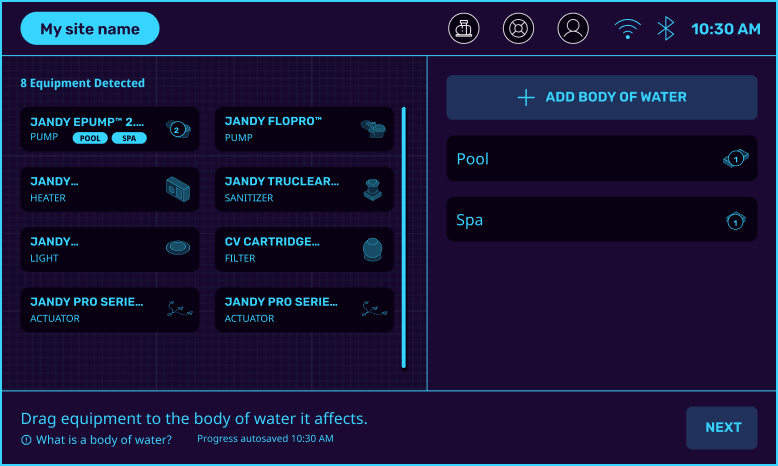
Equipment for Technical Insight
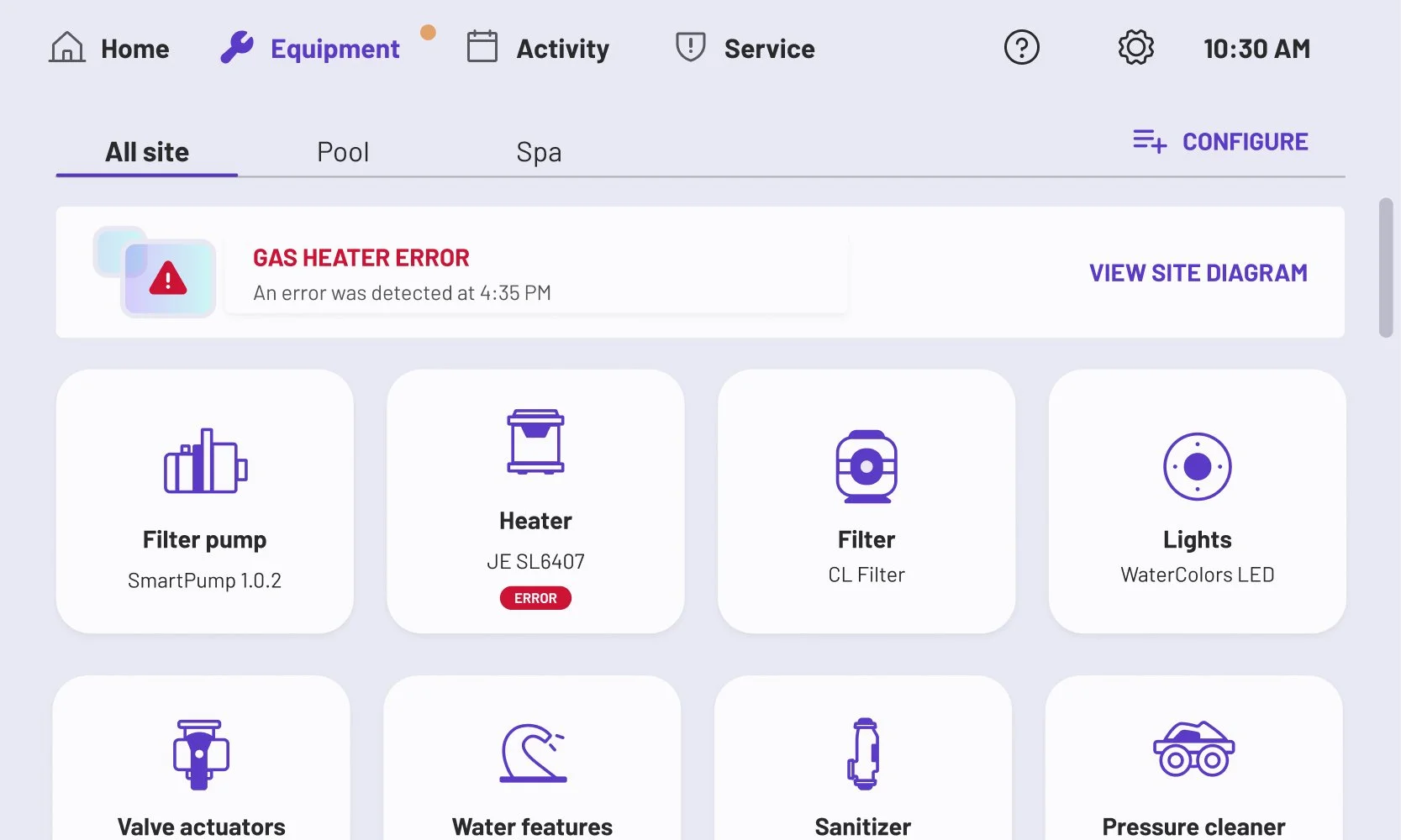
I redesigned the equipment view to function like a technician’s diagnostic panel. The experience surfaces active or flagged systems first, presents real-time data in tight visual groupings, and helps technicians identify issues without digging or guessing.
Validation sessions confirmed that the progressive complexity model reduced hesitation during core tasks while preserving efficient access to advanced system controls. Homeowners demonstrated greater confidence navigating day-to-day functionality, and technicians were able to reach deeper system states with fewer steps and less reliance on external guidance. These signals reinforced that the interaction model could serve both audiences without compromising clarity or control.
Refining the Interaction Model
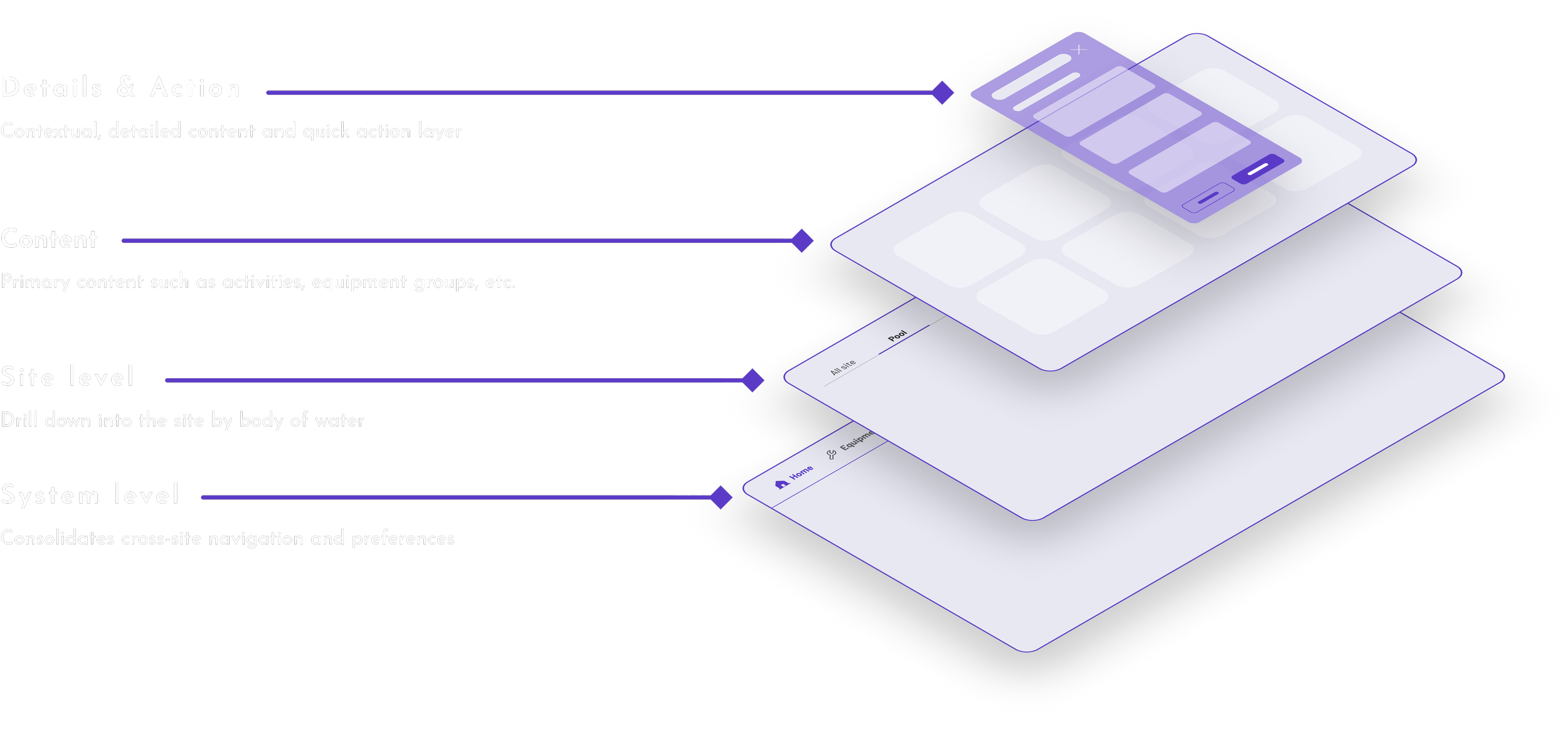
The final experience presented a unified framework that could scale across Fluidra’s future ICD family. This approach resulted in a layered interaction model that organized functionality by intent rather than user type. Primary content surfaced everyday actions and system status, while deeper layers supported configuration, diagnostics, and system-level preferences. This structure allowed the experience to scale in complexity without fragmenting navigation or introducing parallel interaction paths.
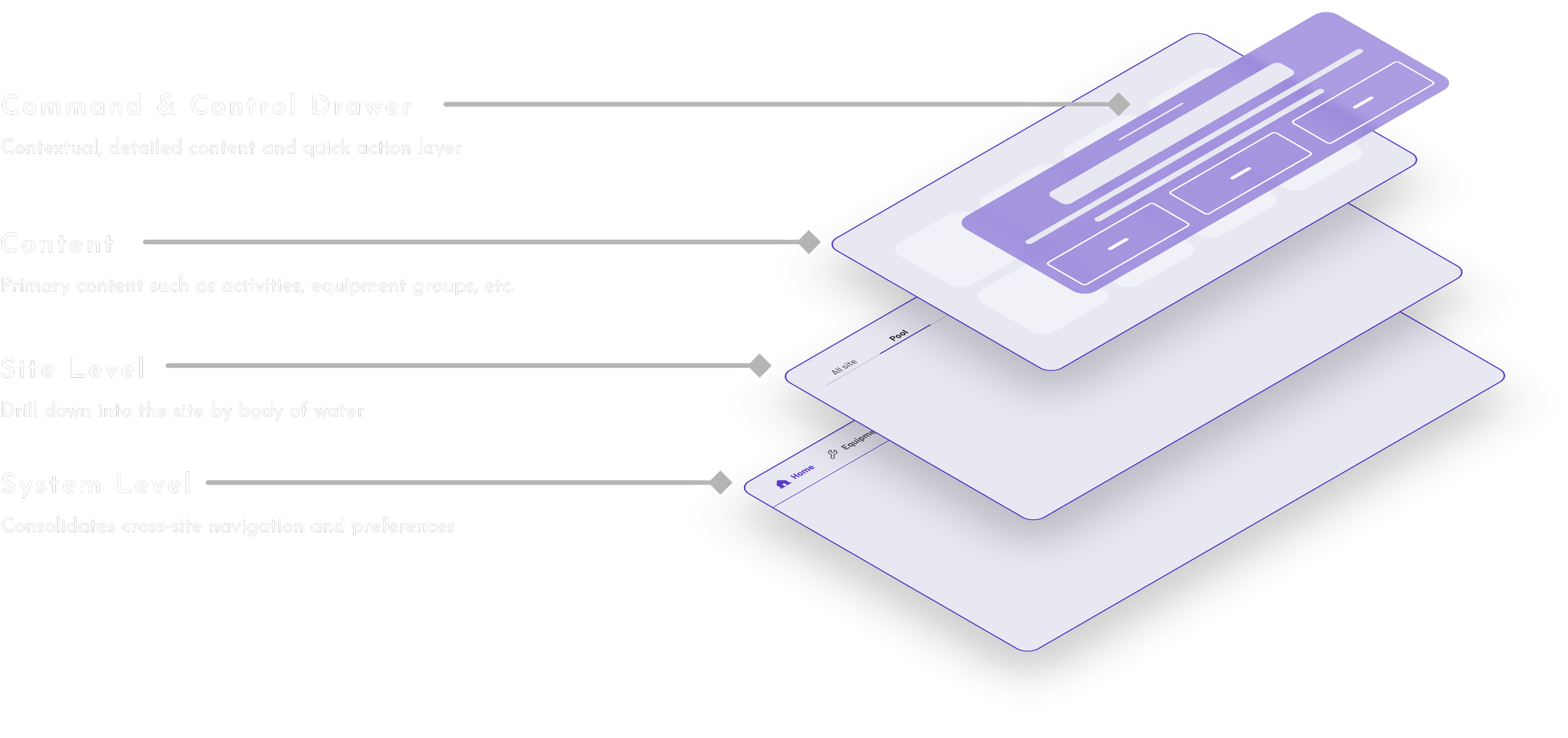
Final Interaction Model
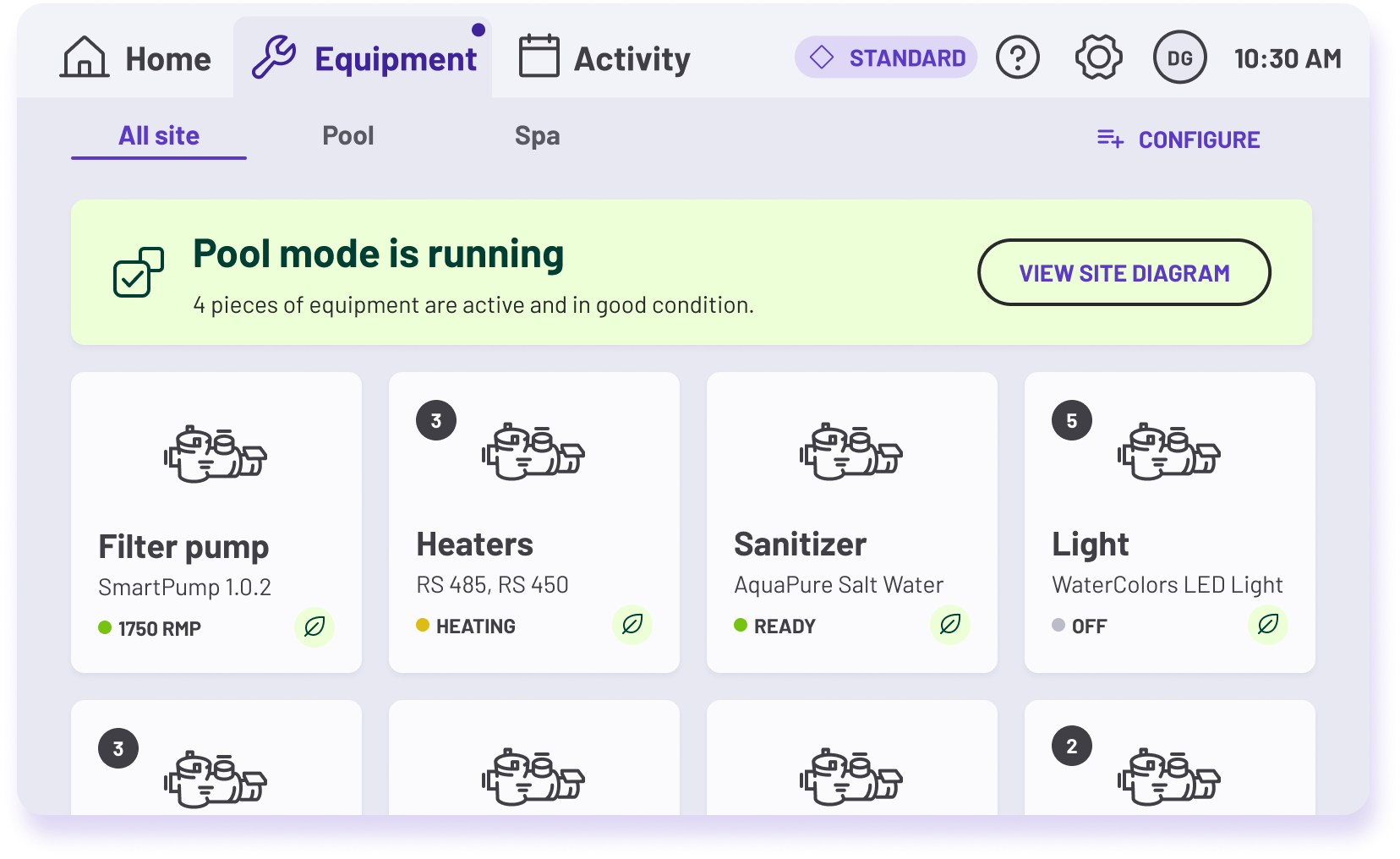
Control Panel Overview
A press-and-hold action that reveals deeper settings, equipment details, and configuration options.
Scheduling Overview
A two-view design that supports both long-term planning and quick event review.
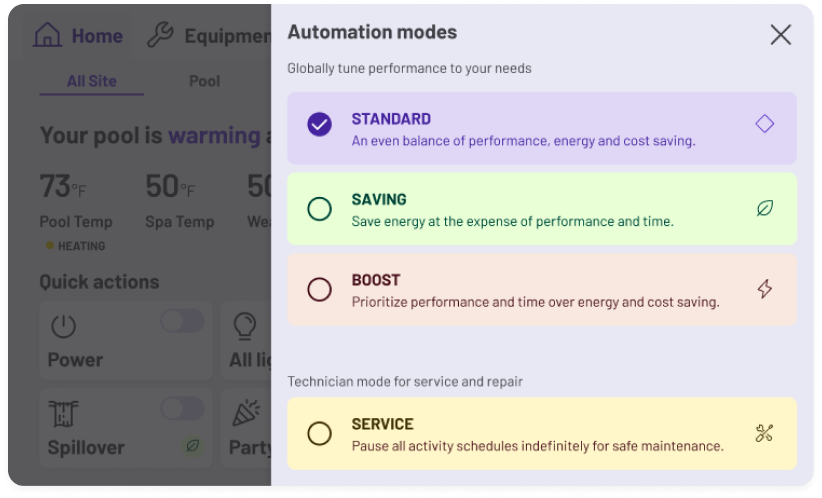
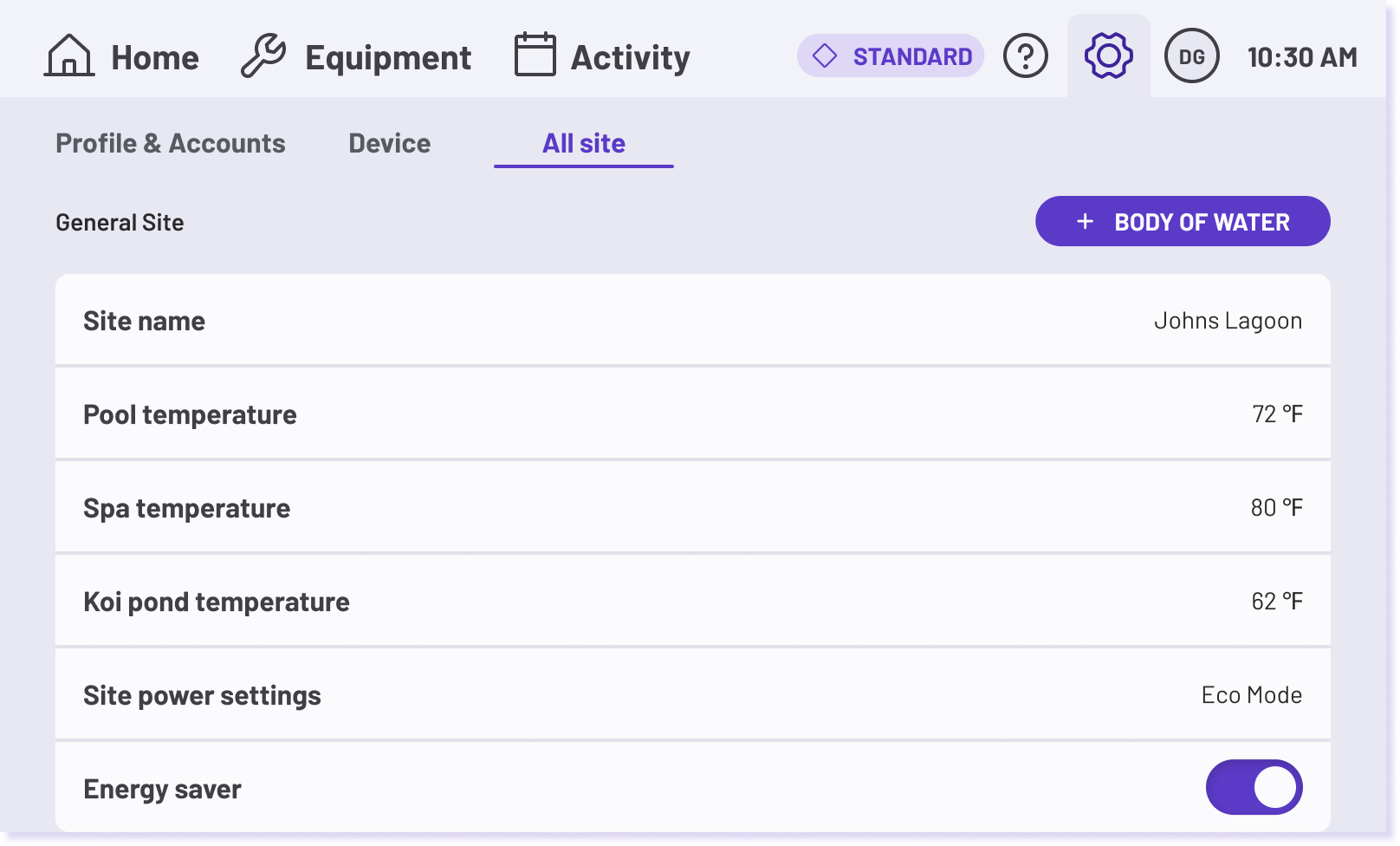
System Preferences
A centralized home for device settings, accessibility, and automation preferences.
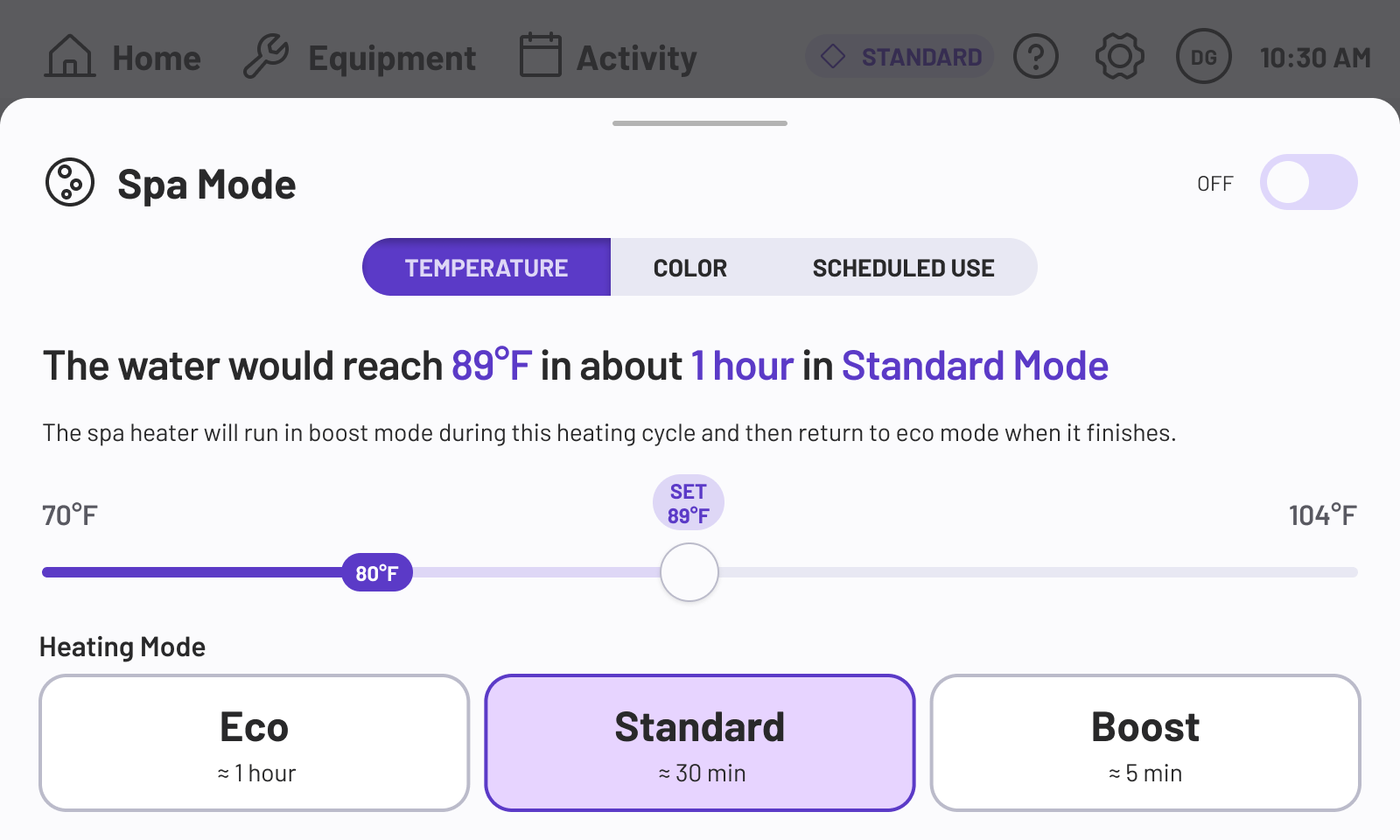
Equipment Overview
A technician-optimized system panel that prioritizes the most important equipment first.
Home Screen Overview
A simplified, confidence-building display for everyday use with the addition of toggle to trigger home screen quick actions.
Smart Features
Future-focused explorations that introduce equipment detection, recommended automation, and contextual guidance. These concepts gave leadership a view into how the ICD could become more intelligent over time.
The final experience presented a unified framework that could scale across Fluidra’s future ICD family. This approach resulted in a layered interaction model that organized functionality by intent rather than user type. Primary content surfaced everyday actions and system status, while deeper layers supported configuration, diagnostics, and system-level preferences. This structure allowed the experience to scale in complexity without fragmenting navigation or introducing parallel interaction paths.
Impact: How the Concept Shifted Fluidra’s Direction
Even though this was a proof-of-concept, the outcome created meaningful traction for Fluidra’s product organization.
The progressive-complexity model was adopted as the direction for upcoming ICD iterations.
Leadership validated the need for clearer support of technician workflows across the entire hardware roadmap.
Engineering used the interaction model to evaluate firmware requirements and prioritize future technical investments.
Testing showed a measurable reduction in homeowner confusion and faster task completion for technicians.
(Directional improvements: technician diagnostic flows required fewer steps, and scheduling comprehension improved across both groups.)
The final concept gave Fluidra a confident starting point for the next phase of ICD development. It positioned the ICD as a smarter, more adaptive control node that respects hardware constraints while making room for future intelligence.
My role spanned research, concept modeling, cross-functional collaboration, hardware-aware design, and detailed interaction refinement. The result was a proof-of-concept that demonstrated how a single embedded display could serve two very different audiences while preparing Fluidra for the next generation of connected pool experiences.

other work.
-
![]()
Big League AI
-
![]()
CFB Lately
-
![]()
Powerful Web
-
![]()
Franklin Templeton
-
![]()
CalAmp