Evolving The Athlete UX for Big League AI

Role
UI & Interaction designer
Timeline
June 2025 - October 2025
Tools
Figma
Deliverables
Interactive Prototype, Visual Design
Overview
Big League AI needed to simplify a confusing journey that left athletes and parents unsure how to improve. I redesigned the experience around a clear sequence that connected motion capture, analysis, and training into one continuous development path. This helped athletes understand what to do next and why it mattered. The new system also set the groundwork for expanding into pitching, team features, and richer analytics.
The State of the Product
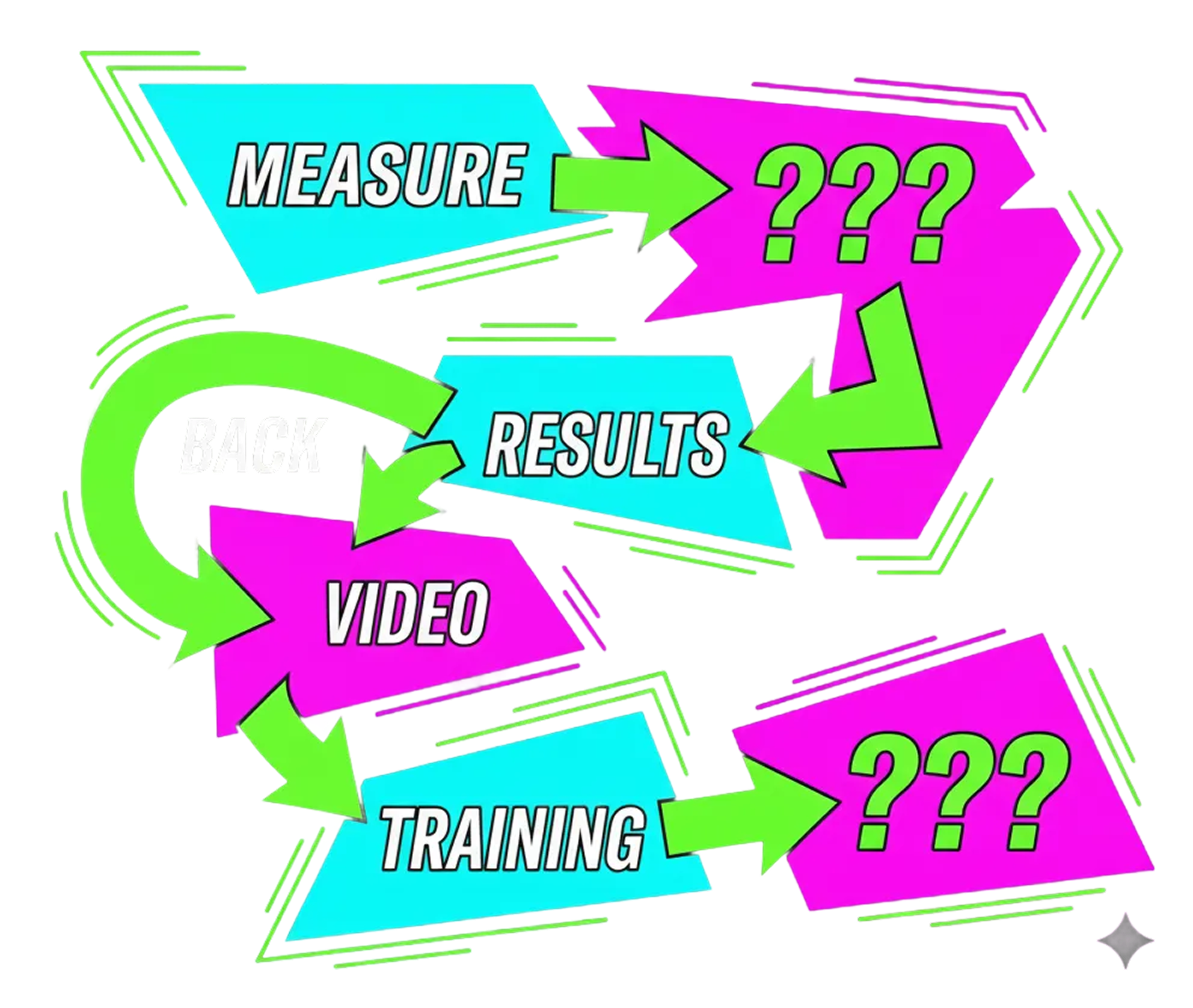
Big League AI is a baseball performance platform that converts raw swing video into personalized, metric driven training. I joined in mid July ahead of an October relaunch to rebuild the athlete journey from the inside out. My focus was to reshape the Measure to Assess to Train loop so the experience would guide athletes with clarity and purpose while giving the company a scalable foundation for athlete development. What started as a confusing sequence of disconnected screens became a coherent training system that athletes, parents, and coaches could trust.
Context and Mandate
Big League AI operates at the intersection of sports, biomechanics, and mobile training. The company had strong motion tracking technology and a loyal early community, but the product experience wrapped around that intelligence created confusion rather than confidence. Young athletes struggled to understand what the app was telling them. Coaches had no visibility into player progress. Parents could not make sense of the journey their kids were going through. Competitors were accelerating quickly and the team had a hard deadline to relaunch in October.
My mandate was straightforward. I needed to rebuild the athlete journey so it was intuitive and credible enough for a twelve year old but still valuable for an advanced high school or college athlete. The redesigned structure also needed to support upcoming expansion into pitching, functional fitness, and team based tools.
The Problem With Real Stakes
The original experience forced athletes to work too hard for too little value.
• First time users could not understand how to get started and what to expect.
• The path from swing to analysis to training felt like a black box.
• Athletes had no sense of progress or improvement over time.
• Training felt generic and disconnected from the analysis.
• Coaches had no way to review or guide their athletes.
This was happening at the worst possible moment because the October relaunch was expected to show meaningful improvement in clarity, satisfaction, and retention. The existing system could not support that expectation.
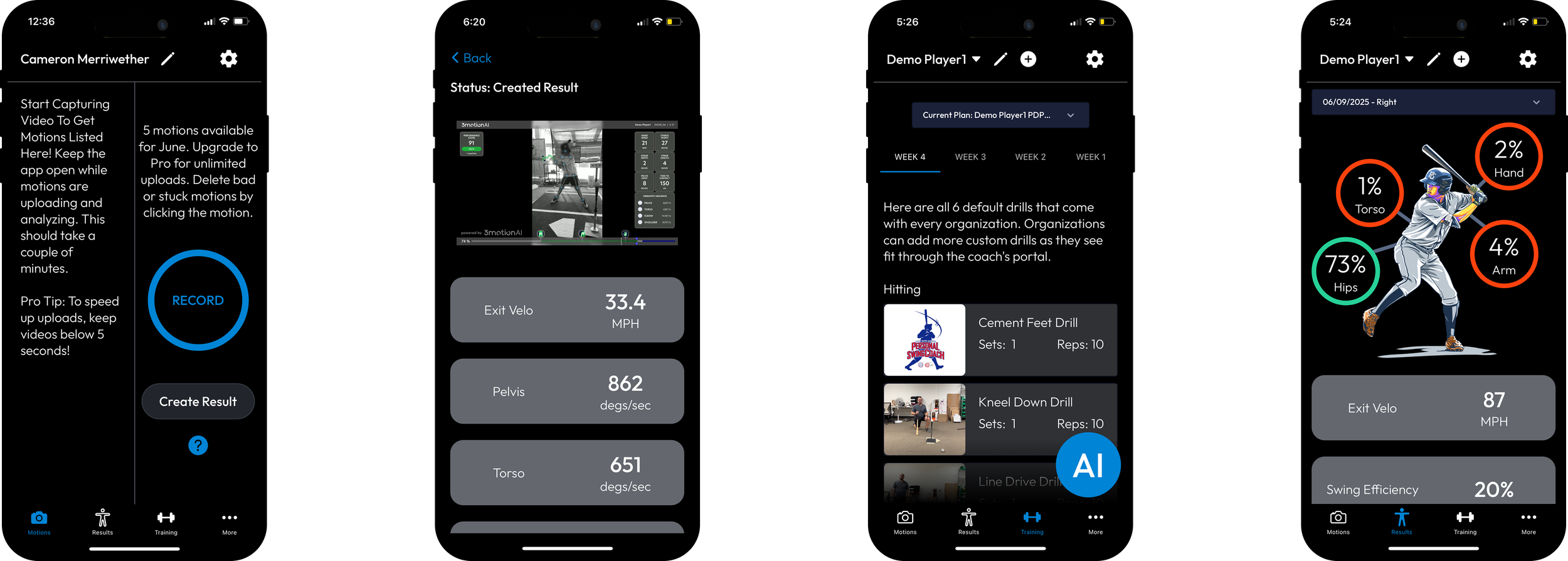
Previous design
Constraints and Reality
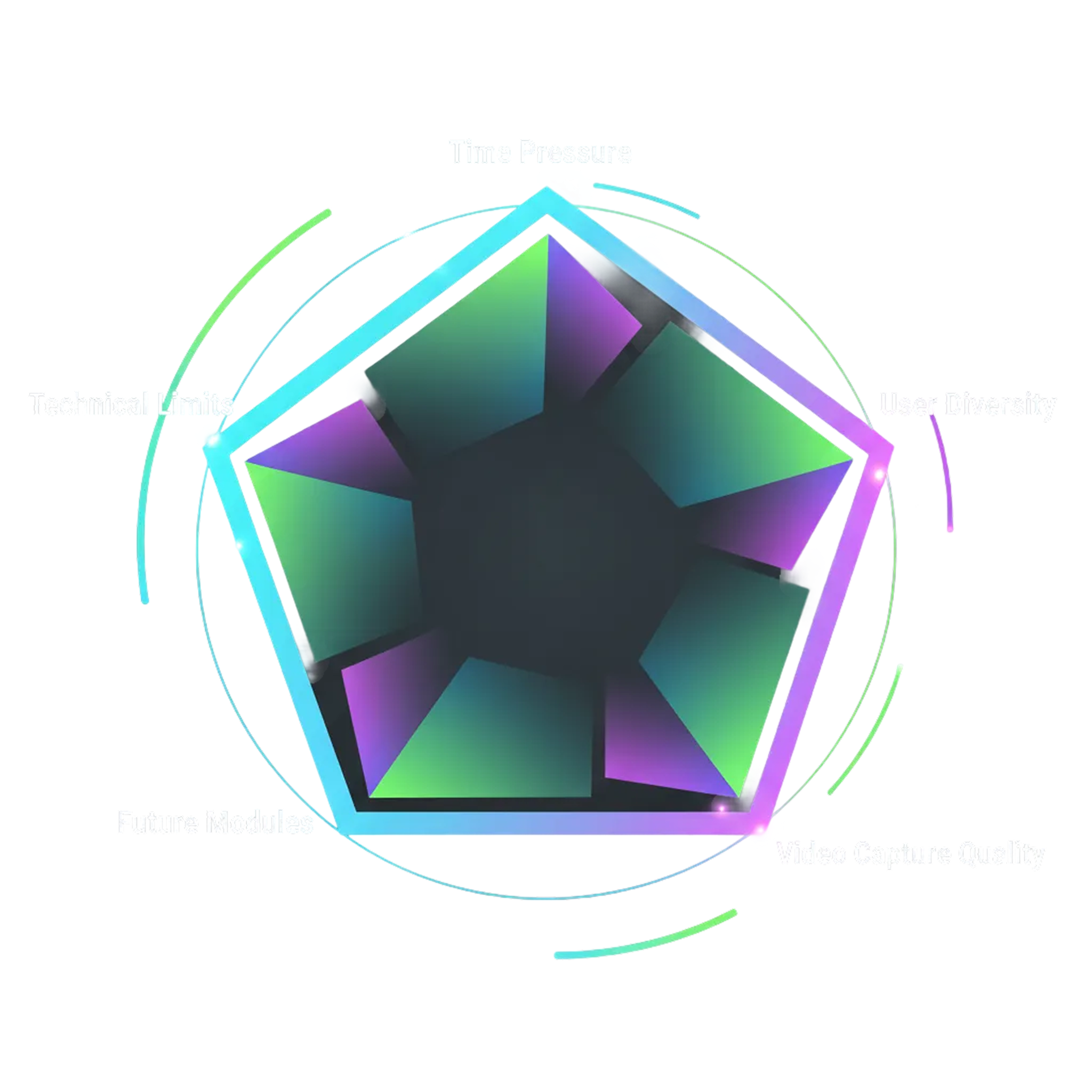
Several practical constraints shaped the redesign from day one.
• The October relaunch created a compressed timeline that forced disciplined prioritization.
• The user base spanned a wide age range including youth athletes, high school players, college athletes, and parents.
• The company planned to add pitching and functional fitness shortly after launch which meant the foundation needed to scale.
• Video quality varied which introduced downstream friction for analysis and model performance.
• Upload support required backend coordination across data pipelines and model ingestion.
• Coaches needed multi athlete support but that work was staged for the next development cycle.
• The visual identity was flexible enough to modernize but required consistency to earn trust.
These constraints kept the redesign grounded in what was feasible while still making room for the long term vision.
Execution
Process
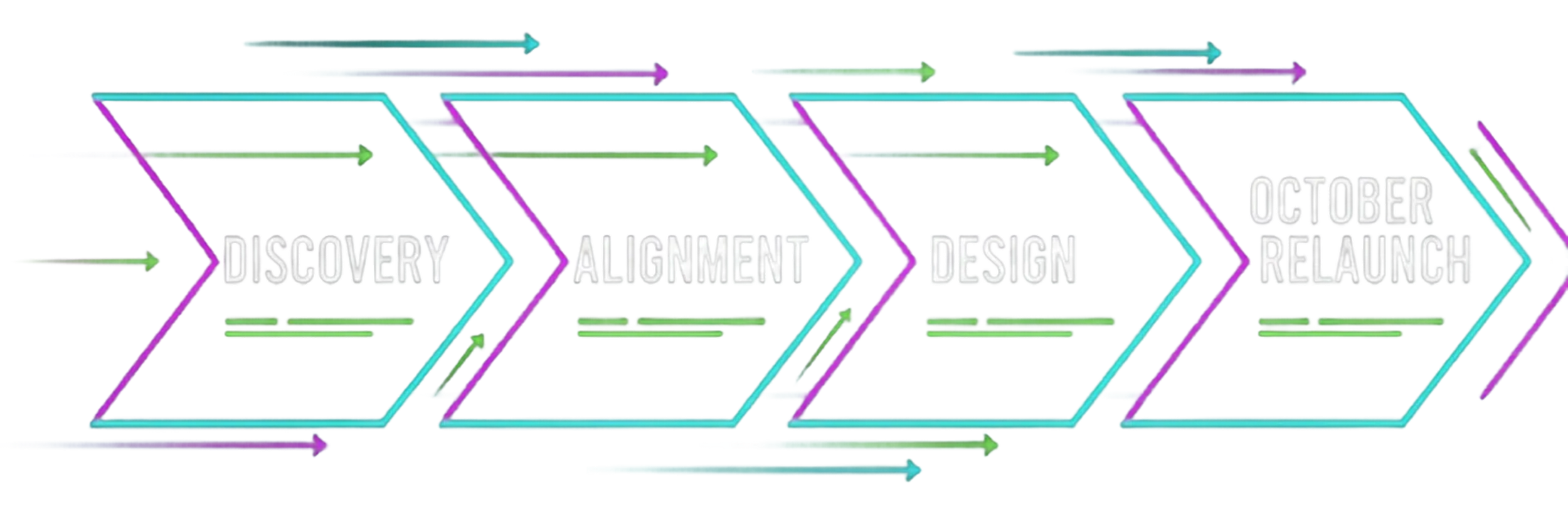
Given the timeline, the process was intentionally focused and pragmatic.
Discovery
I audited the entire experience and surfaced the hidden friction points inside each step of the core journey.
Alignment
The team aligned around a single powerful loop that reframed the entire product experience.
Design Exploration
I rebuilt the workflows around clarity, transparency, progression, and personalization so athletes understood where they were and what came next.
Iteration
I met with founders and developers in a tight feedback loop to refine interaction details and ensure feasibility without compromising the goal of the redesign.
Key Decisions
Guided onboarding
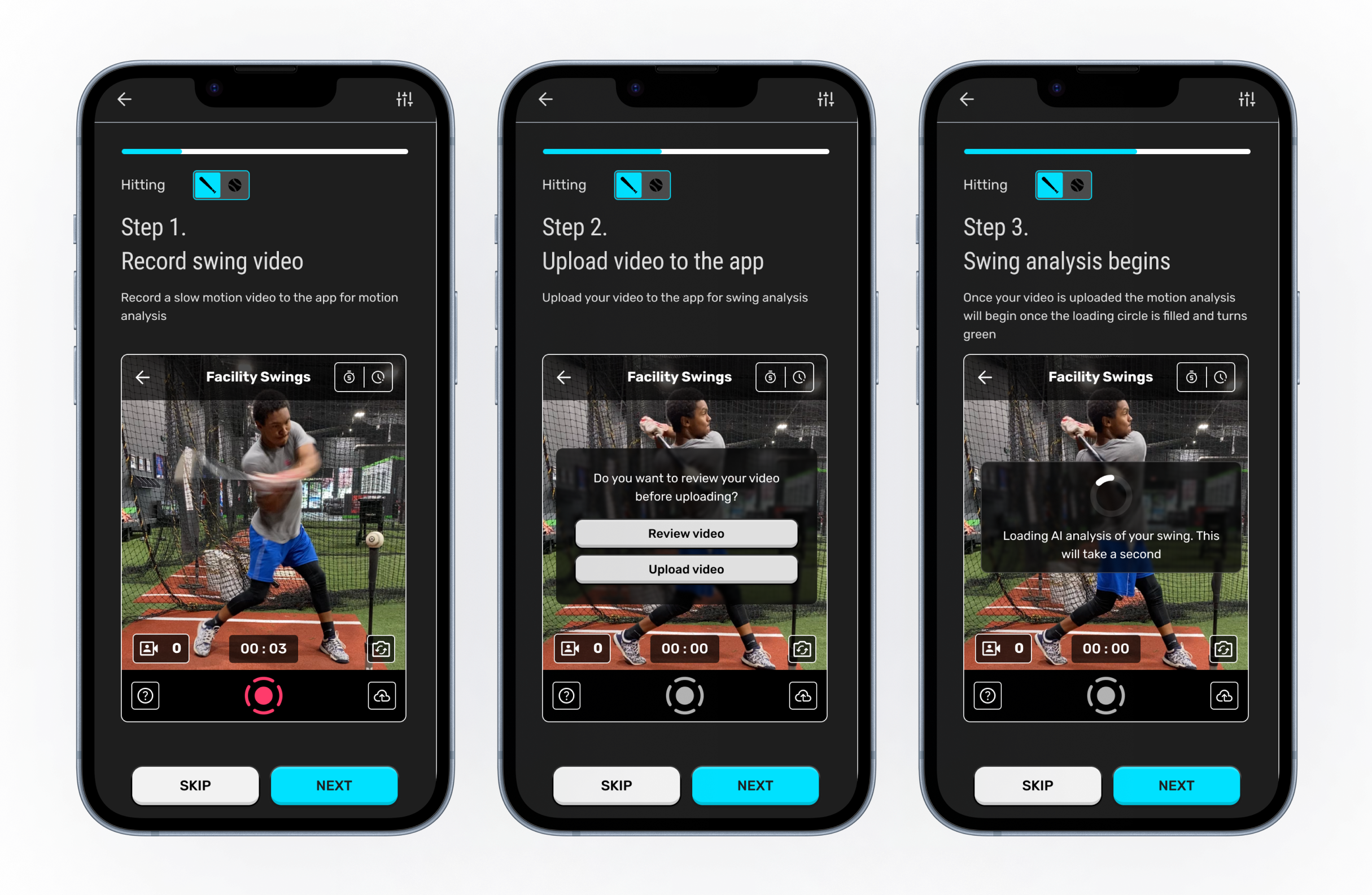
I chose contextual guidance inside the workflow instead of using a heavy tutorial or a hands off experience. This helped athletes understand motions and results without overwhelming them.
Phased expansion
Pitching, functional fitness, and coach tools were staged for early Q1 and Q2. Mentioning this in the case study reinforced that not every feature was included in the October relaunch.
Transparent AI logic
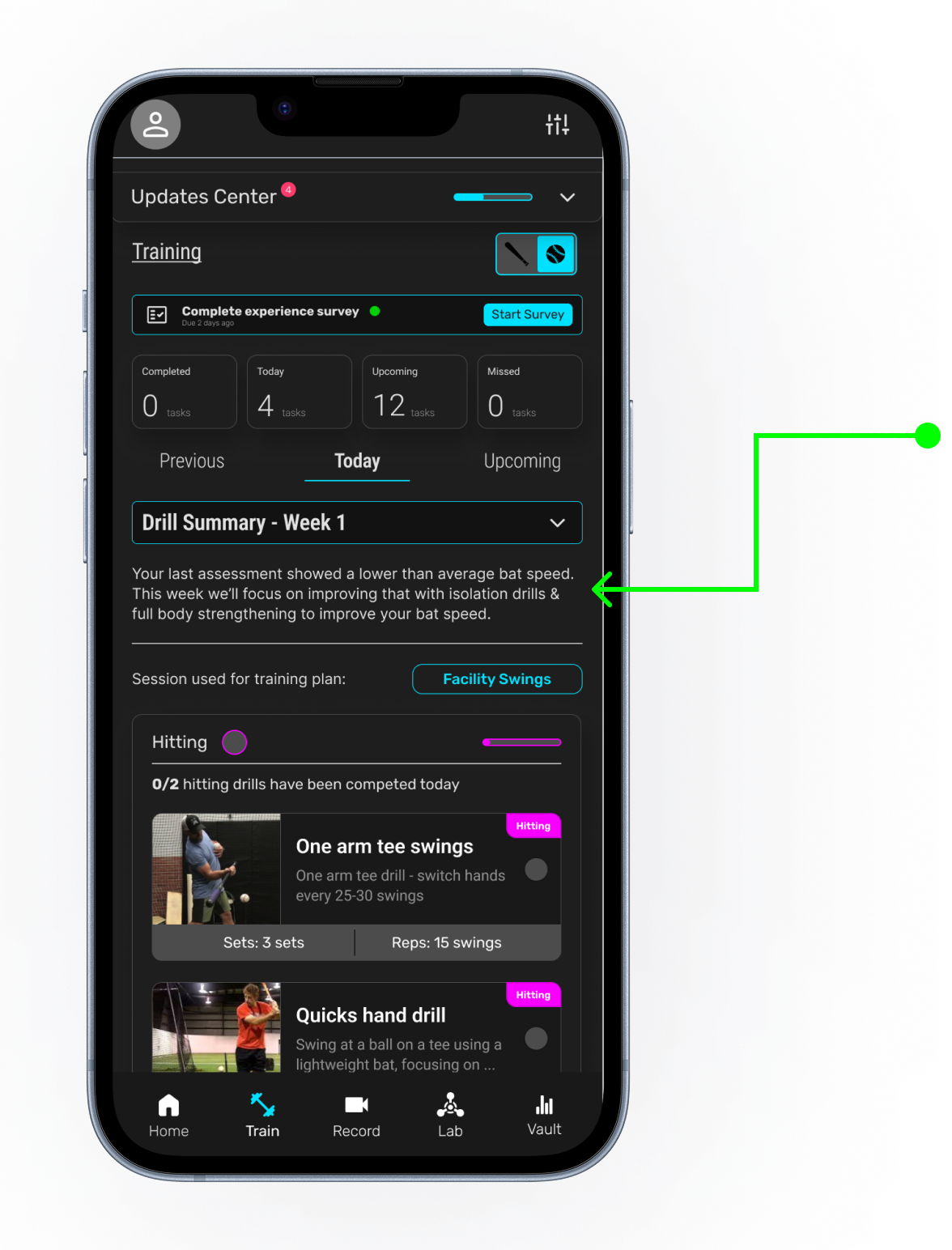
I added explanations for why each drill was assigned. This increased confidence in the training program and reduced confusion from parents and older athletes.
Accessible visualizations
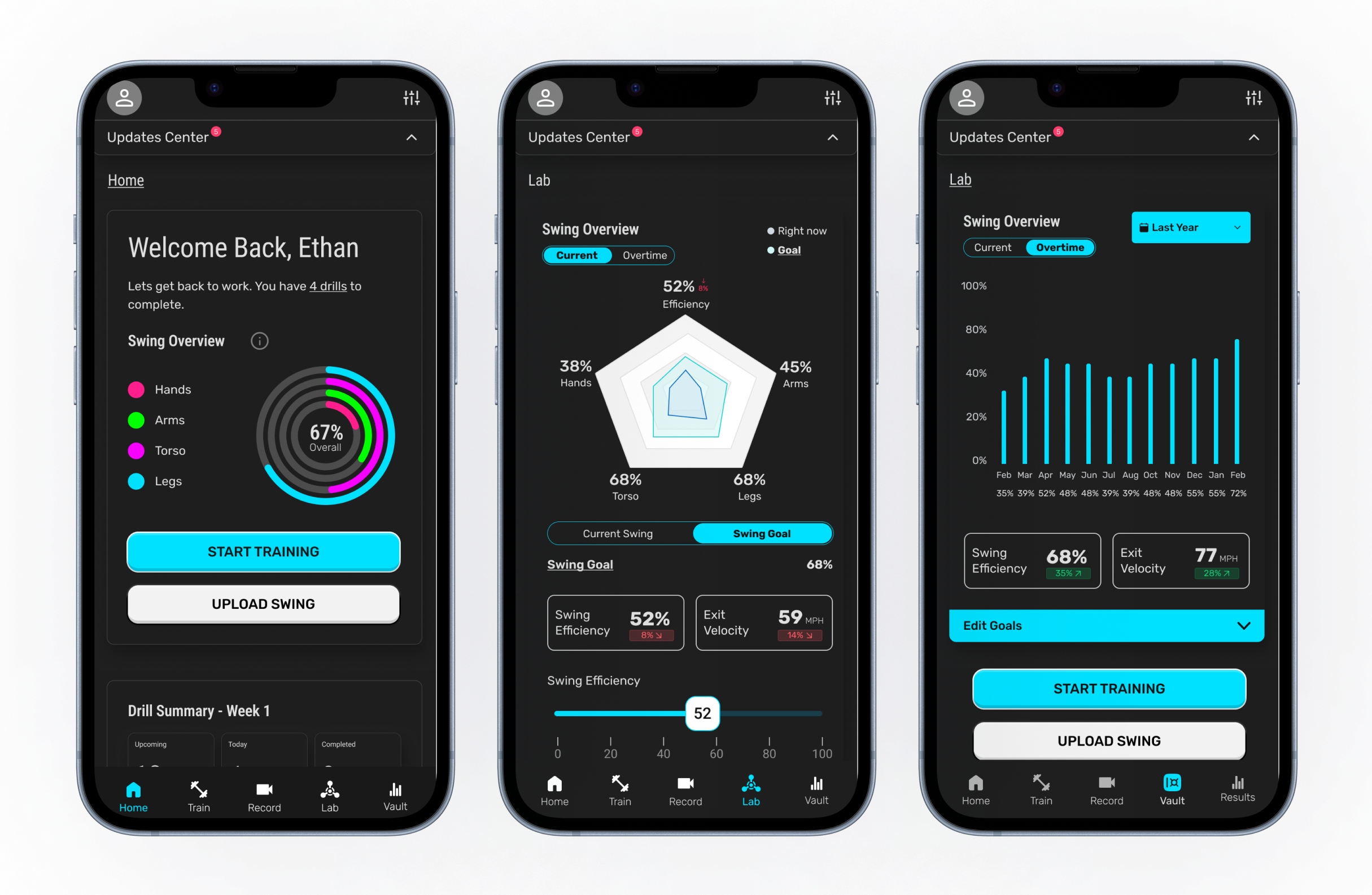
We replaced dense charts with clean information grids, simple biomechanics visuals, and clear benchmarks that matched how players and parents interpret progress.
Systems Thinking
The Unified Loop
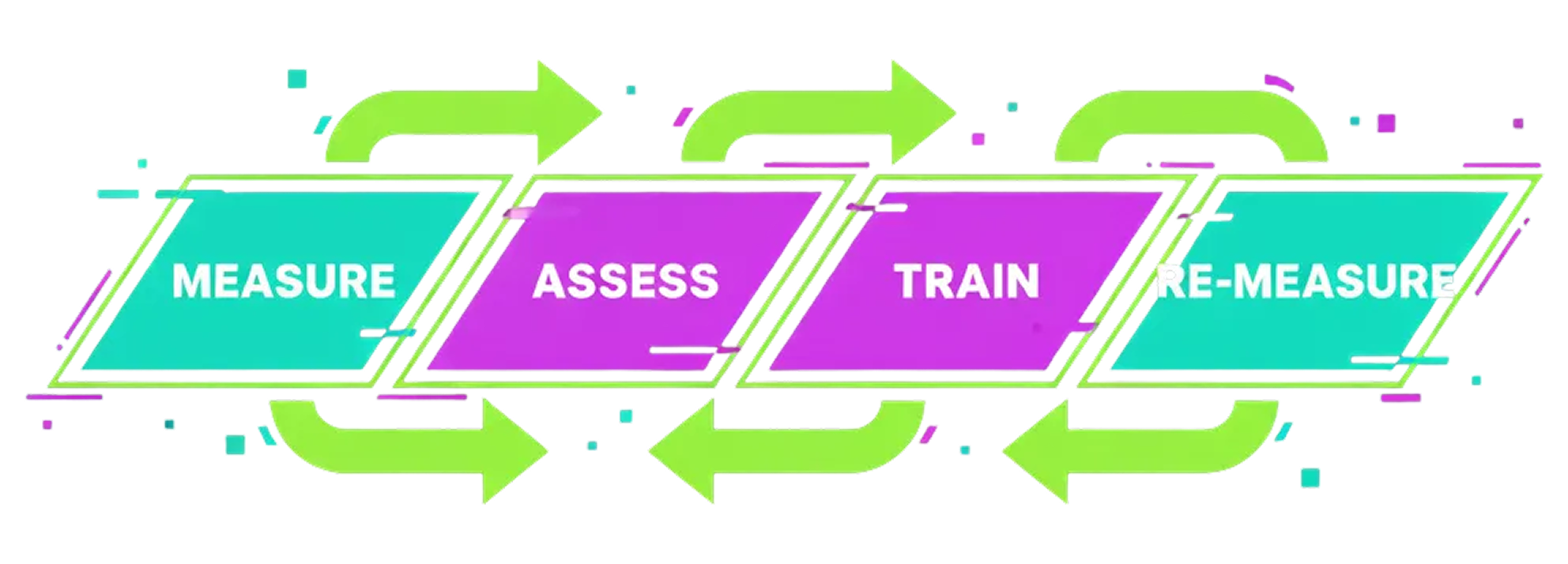
Measure captures a swing. Assess analyzes it. Training provides personalized drills. Remeasure reinforces growth. This loop became the backbone of the redesign and guided every screen level decision.
Home Hub
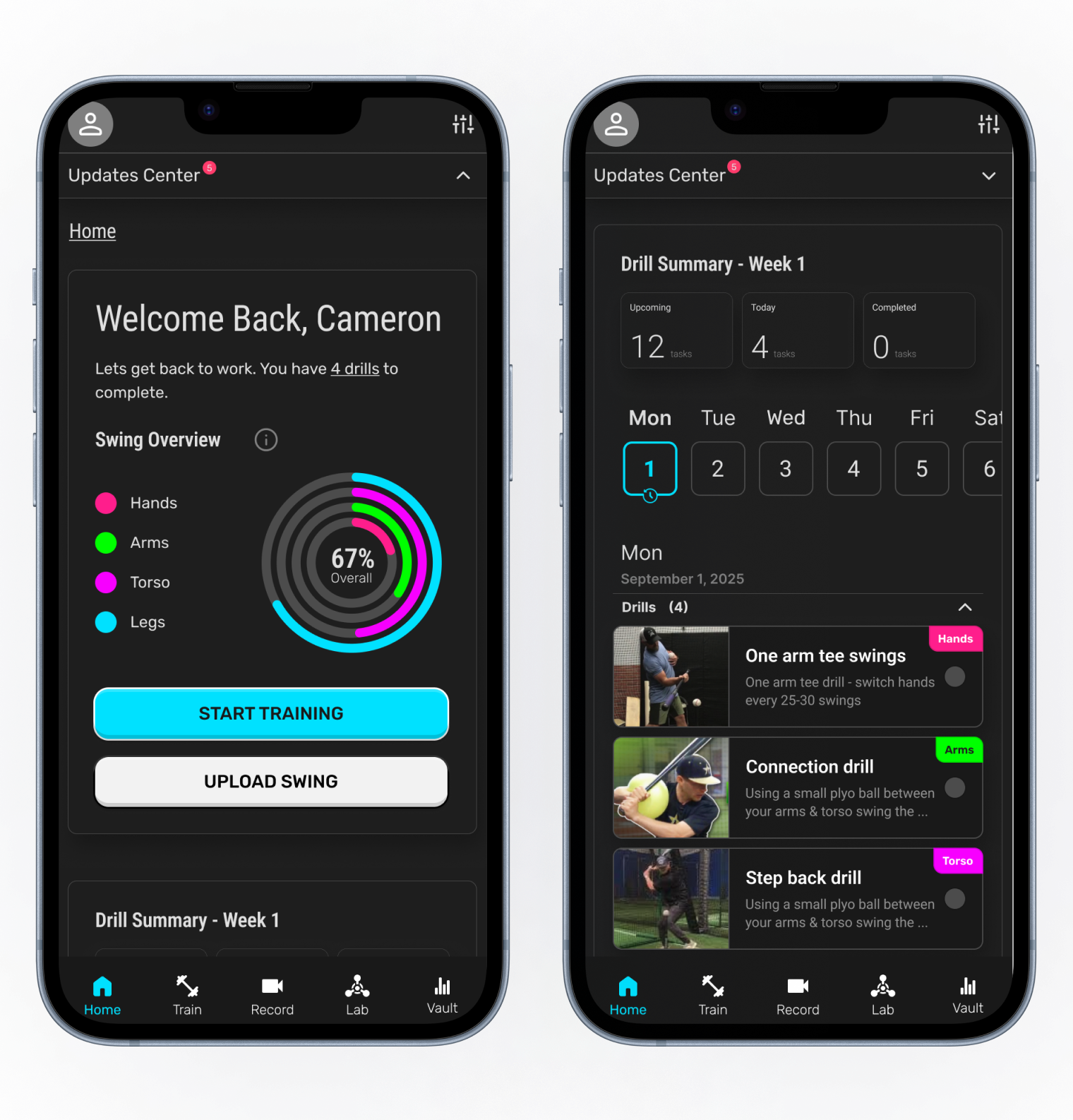
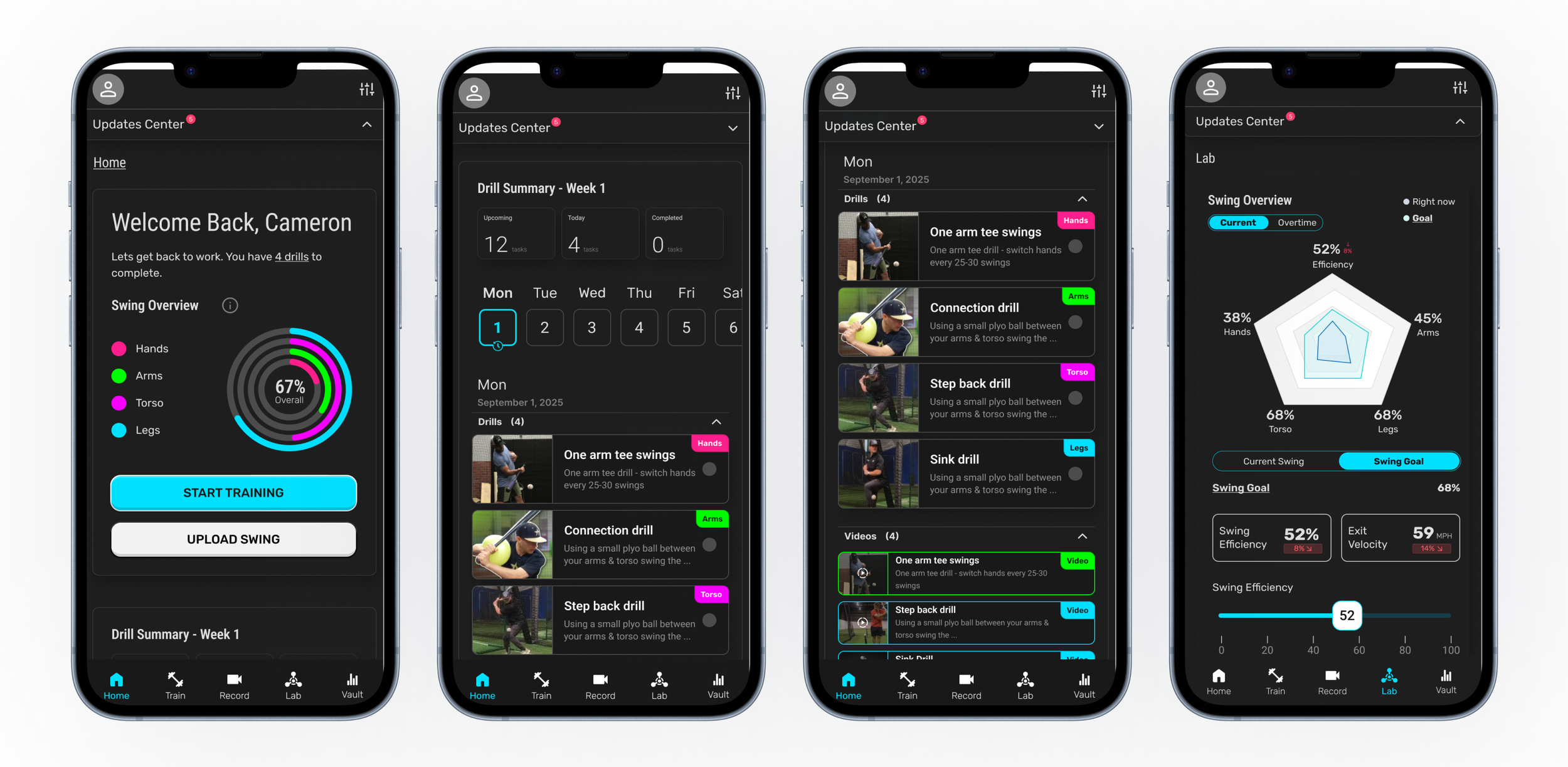
The Home Hub would become the central location for swing history, drill performance, reminders, and progress indicators. It gave athletes and parents a place to understand overall development.
Future ready architecture
Pitching, functional fitness, and coach tools were designed to plug naturally into the same Measure to Assess to Train loop, ensuring a coherent future product ecosystem.
The Aha Moment That Shifted the Redesign
A pivotal insight came from speaking with athletes and reviewing support feedback. Players were not confused by biomechanics. They were confused by sequence. Once we saw that athletes understood the individual steps but not the order, it became clear that the development system needed to shift from a set of isolated features to a structured loop.
Measure to Assess to Train to Remeasure was the turning point. Once this sequence became explicit, the entire experience became more predictable and more understandable for both athletes and parents. The team immediately aligned around this framing and momentum accelerated.
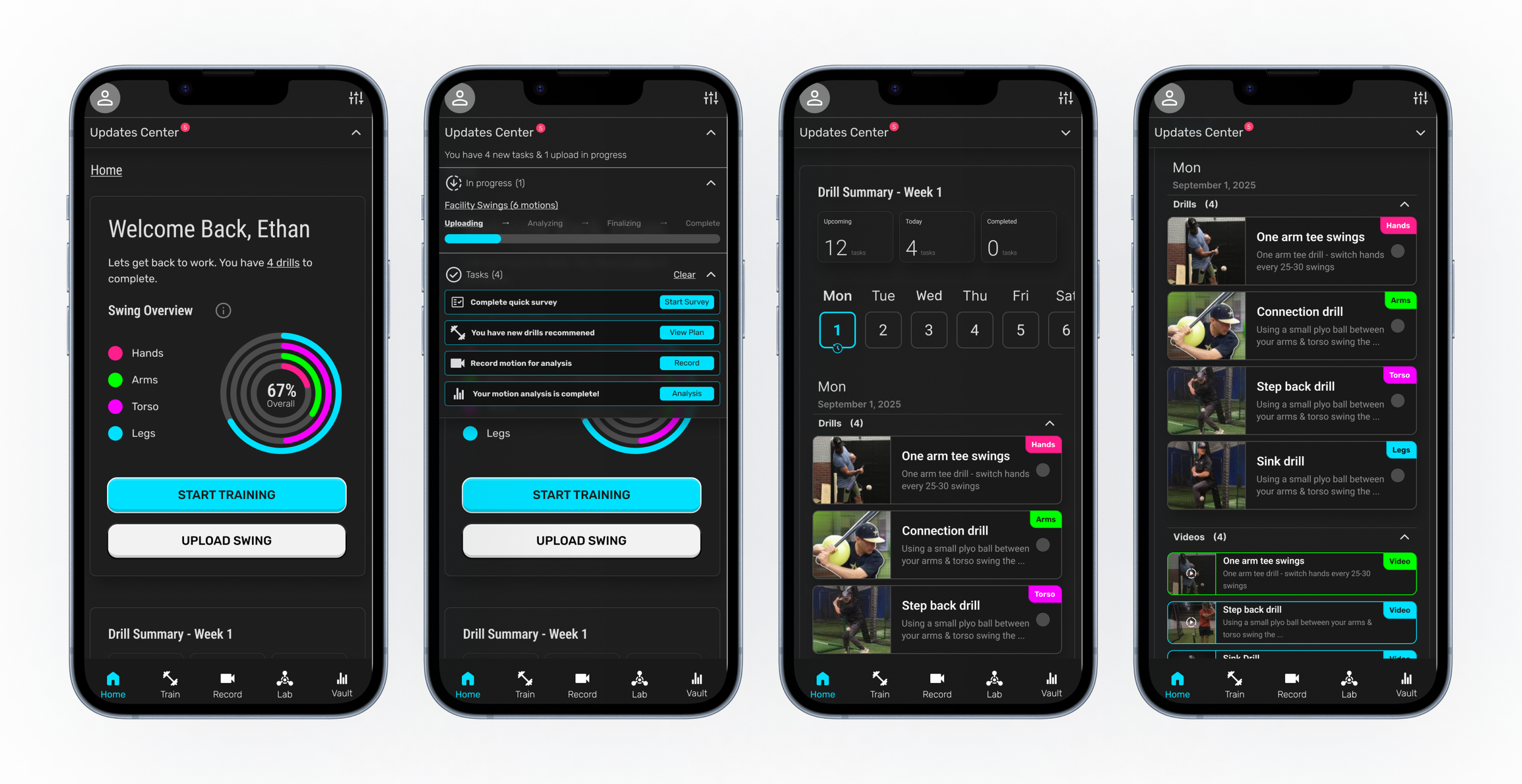
Solution Overview
Motions
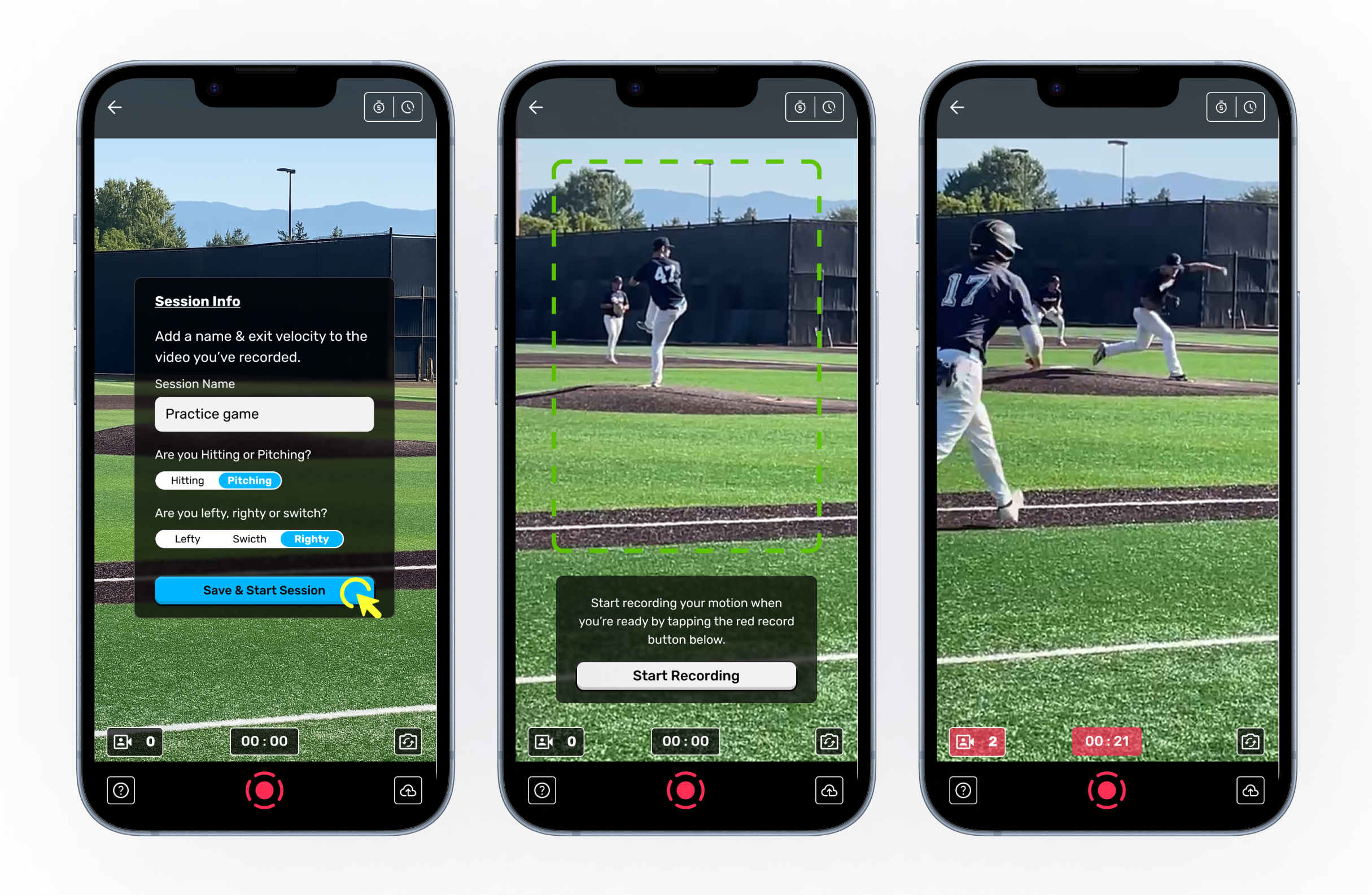
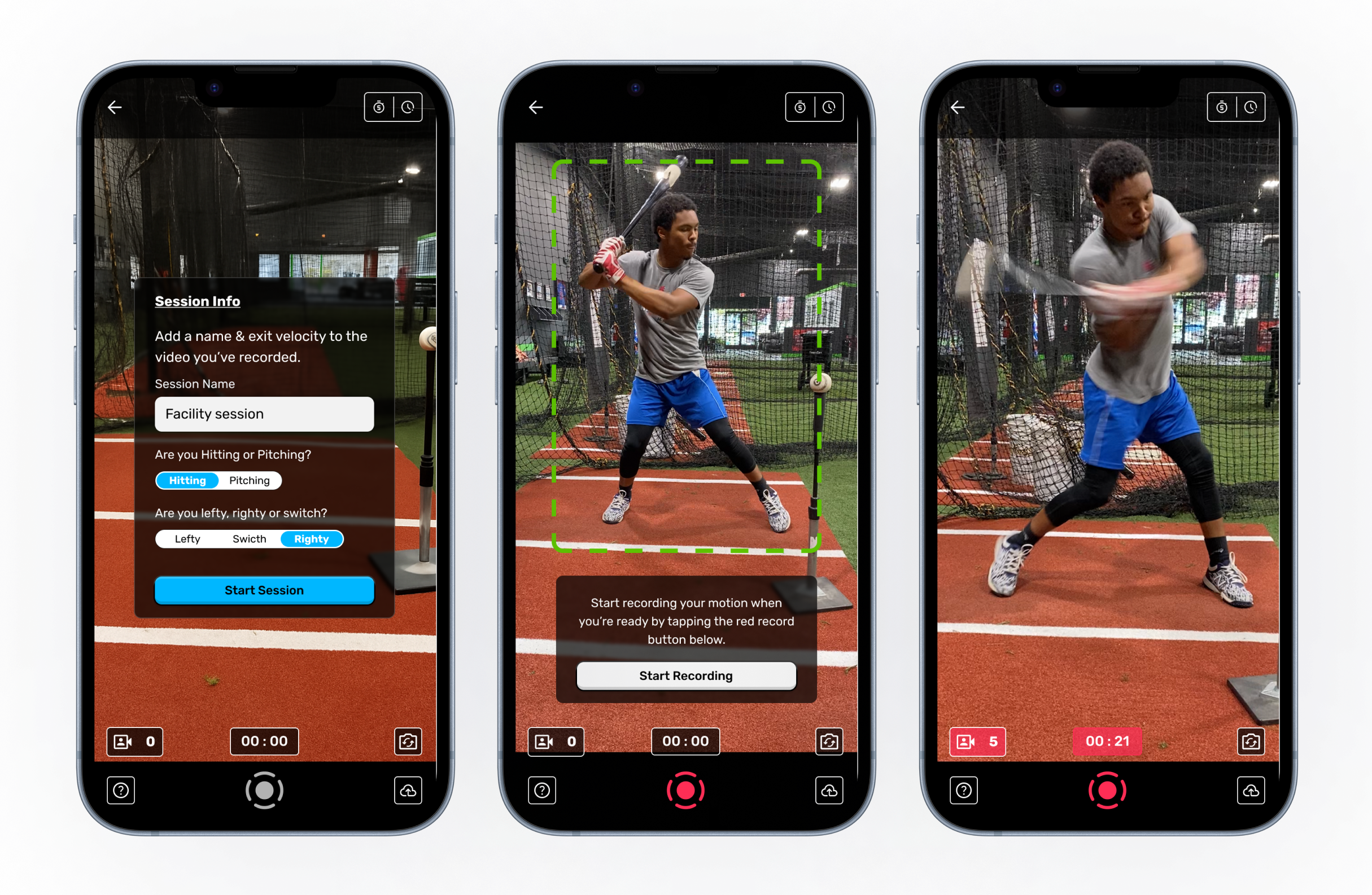
Capture became more structured with guided setup, upload support, progress visuals, and simple coaching moments that helped athletes meet the analysis requirements.
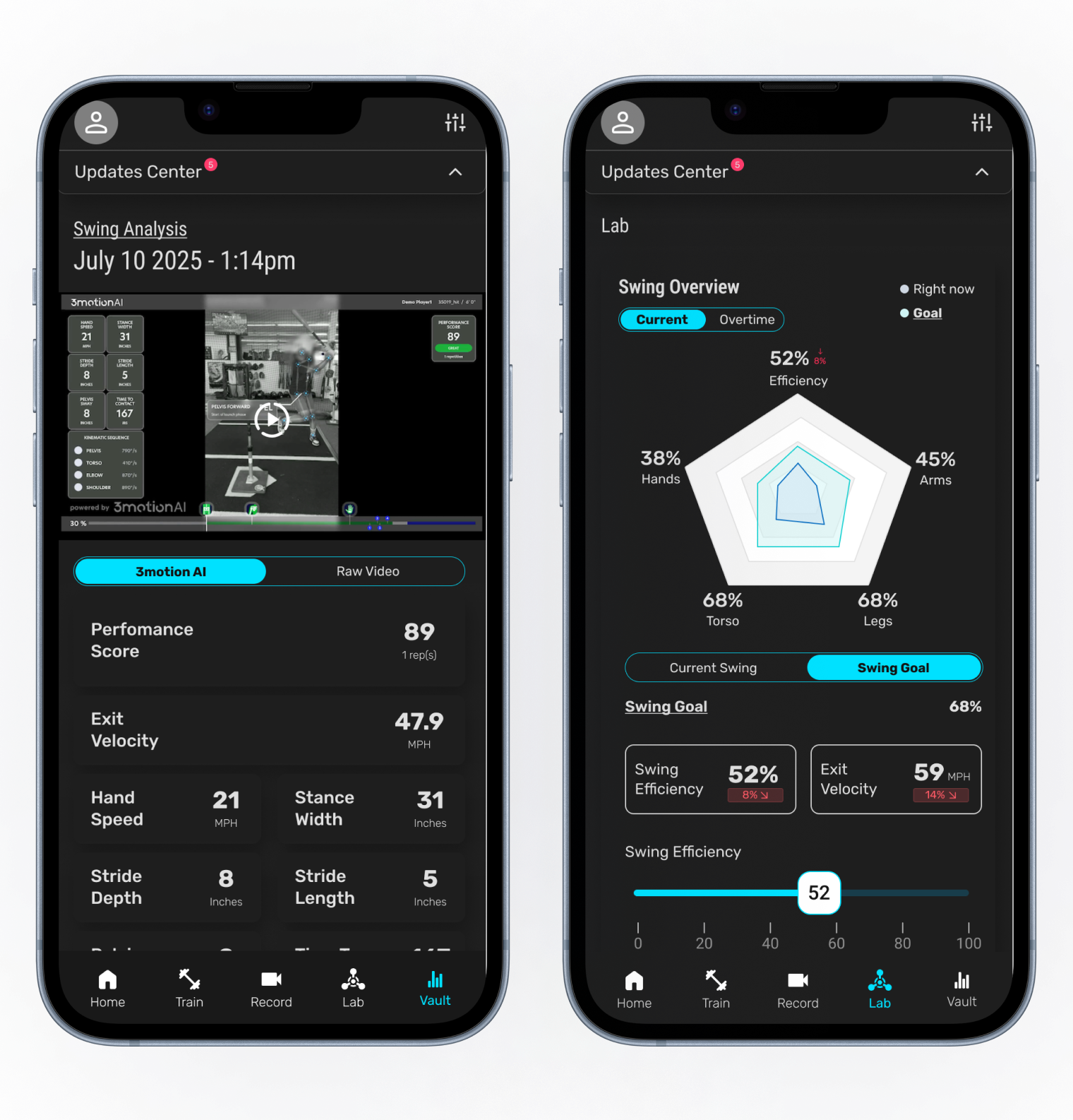
Results
The analysis experience became more transparent with clean biomechanics, metrics, age appropriate benchmarks, and clear comparisons between baseline and improved targets.
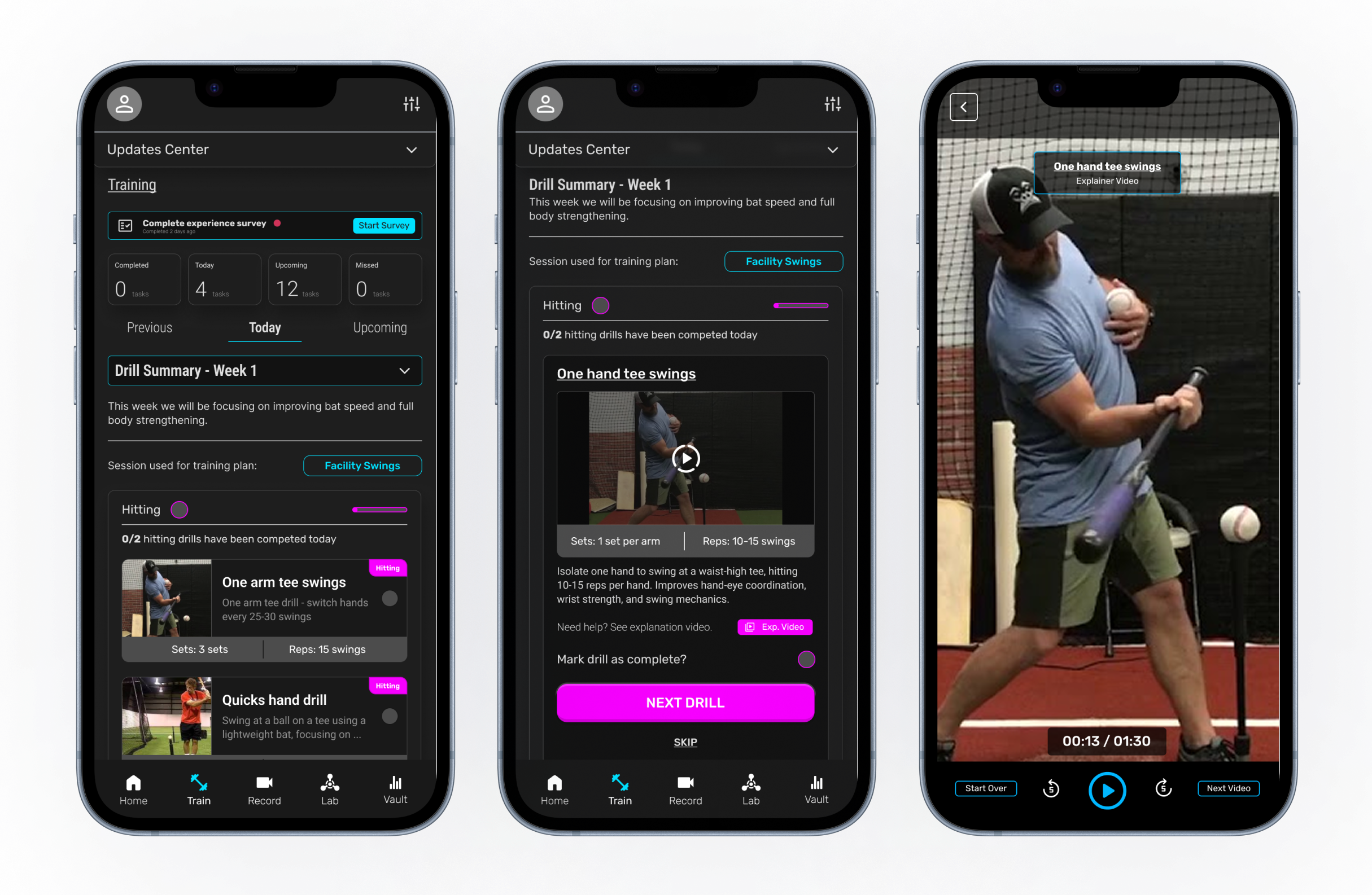
Training
Training became goal based and metric driven. Drills included focus tags, execution feedback, and improvement loops tied directly to the results. Additionally, the AI logic transparency in drill recommendations provided clarity for parents and built trust with advanced athletes.
Home Hub
The Home Hub tied everything together and served as the command center for the athlete.
Impact
Quantitative direction
Based on prototype evaluations and early real world behavior we saw clear signs of improvement.
• Athletes showed a 40 to 60 percent reduction in confusion during the first session.
• Swing submissions increased as upload flexibility reduced failed attempts.
• Athletes completed more training sessions because drills felt relevant and purposeful.
• Parents reported higher clarity and confidence in the training journey.
Qualitative impact
The team observed a meaningful shift in how athletes understood their own development. Players began referencing concepts, metrics, and drill rationales that were not understood at all in the previous experience.
Before & After
Before the redesign athletes struggled to understand the value of the platform and often abandoned flows mid session. After the redesign the journey followed a clear pattern where each action supported the next. The platform moved from a loose collection of features to a coherent development system.

Reflection and What Comes Next
This redesign positioned Big League AI for a stronger and more credible future. The foundation built for the October relaunch created a scalable system that can support pitching, early coach dashboards, and more dynamic feedback models. Although several advanced features were not included in this release they were intentionally scoped for the next product cycles in Q1 and Q2.
The October relaunch established a framework that the company can build on for years. It also reinforced the importance of clarity, sequencing, and trust when designing for athlete development systems.
other work.
-
![]()
CFB Lately
-
![]()
Powerful Web
-
![]()
Franklin Templeton
-
![]()
Fluidra
-
![]()
CalAmp
-
![]()
McGraw Hill